FDA Approves Novartis's Rhapsido as First Drug for Symptomatic Dermographism
The oral BTK inhibitor wins a second US indication on a phase 3 cohort in which 29.3% of treated patients, versus 14.0% on placebo, cleared their hives at week 12.
Key facts
- FDA approved Rhapsido (remibrutinib) on October 7, 2026 for adults with symptomatic dermographism inadequately controlled by H1 antihistamines.[1][2][3]
- In the RemIND phase 3 dermographism cohort, 29.3% of remibrutinib patients had complete response at week 12 versus 14.0% on placebo (P = .0229).[1][3][4]
- Most common adverse events (at least 3%) were nasopharyngitis, bleeding, headache, nausea and abdominal pain; FDA first approved remibrutinib for CSU on September 30, 2025.[1][2]
- Novartis says over 90% of adults with chronic hives have CSU or symptomatic dermographism and over half of dermographism patients stay symptomatic on H1 antihistamines.[1][3]
The US Food and Drug Administration on October 7 approved Novartis's oral drug remibrutinib, sold as Rhapsido, for adults with symptomatic dermographism whose symptoms are not controlled by H1 antihistamines. According to Novartis's announcement, it is the first treatment cleared specifically for the condition. The decision is narrow in patient numbers and modest in trial effect, but it shows how a single targeted drug is being stretched across a family of related skin diseases.
What was approved
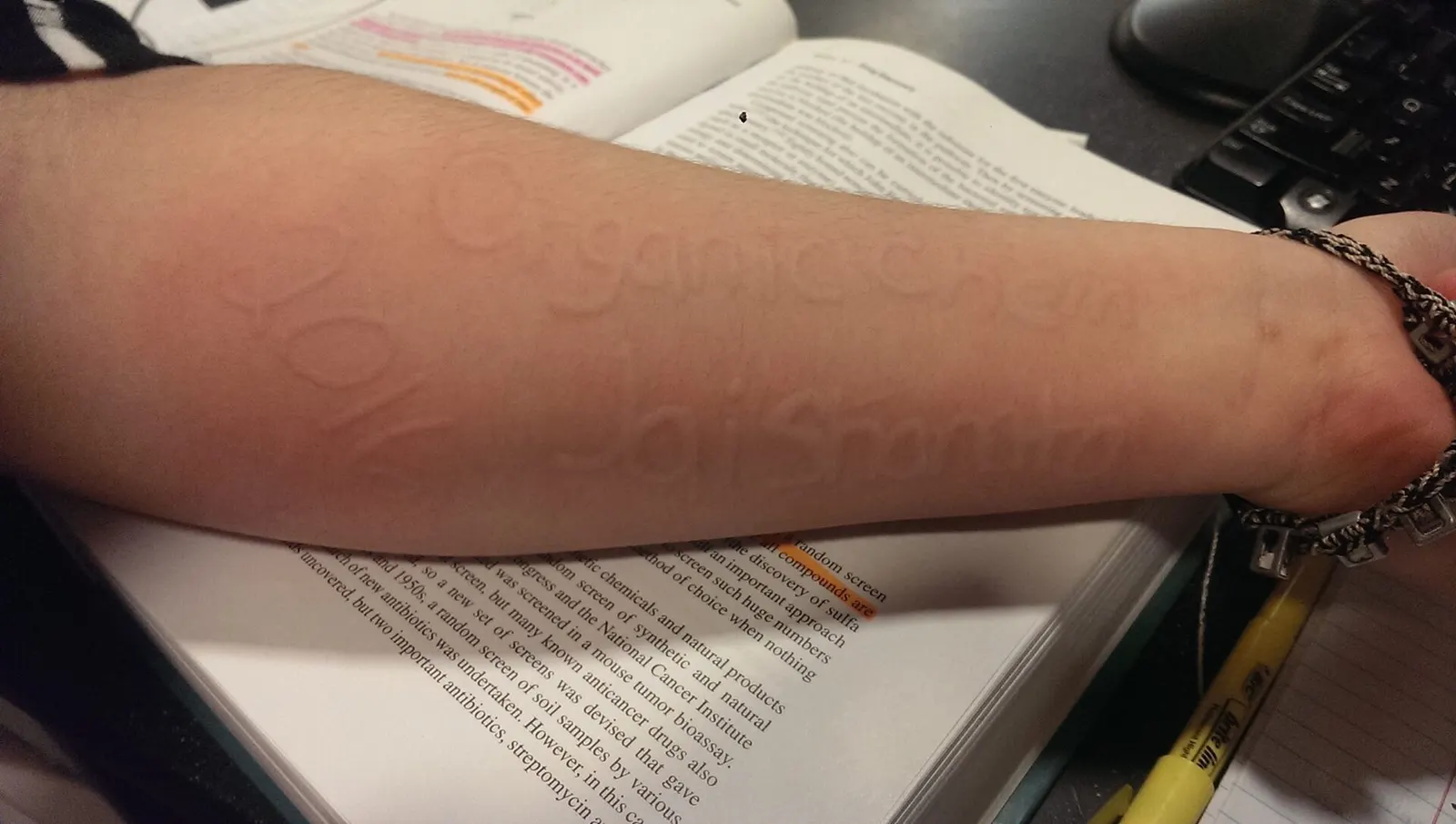
Symptomatic dermographism, sometimes called dermatographic urticaria, produces raised, red, itchy hives within minutes of light pressure, rubbing or scratching, as AJMC reported. Novartis says it is the most common type of chronic inducible urticaria, meaning hives with a physical trigger, and that more than half of patients remain symptomatic despite H1 antihistamines, the standard first-line therapy.
Remibrutinib is an oral, highly selective inhibitor of Bruton's tyrosine kinase (BTK), which blocks a pathway involved in histamine release. The FDA first approved it for chronic spontaneous urticaria (CSU), hives without an external trigger, on September 30, 2025, according to AJMC. The new indication is an expansion of that label. Novartis says Rhapsido is now the only prescription treatment approved in the United States for both CSU and symptomatic dermographism. In the European Union, the United Kingdom and China, the company says, it is approved only for CSU.
Novartis also states that more than 90% of adults with chronic hives have either CSU or symptomatic dermographism. That framing explains the commercial logic: once a drug is in the clinic for the larger group, adding the second large group extends the same prescribing base.
The evidence
The approval rests on the symptomatic dermographism cohort of RemIND, a phase 3 trial (NCT05976243) that enrolled patients who stayed symptomatic on second-generation H1 antihistamines and compared remibrutinib with placebo. The primary measure was complete response from hives, measured by the Total FRIC score.
At week 12, 29.3% of patients on remibrutinib reached complete response, against 14.0% on placebo (P = .0229), according to Dermatology Times and the Novartis release. Novartis reports that responses appeared as early as week 2. Through week 24, it describes the safety profile as consistent between dermographism and CSU. The most common adverse events, occurring in at least 3% of patients, were nasopharyngitis, bleeding, headache, nausea and abdominal pain. Novartis states that no routine laboratory monitoring is required.
Those numbers support two readings. The first is favourable: roughly twice as many treated patients cleared their hives completely, and no earlier drug had a regulatory indication for the condition. Healio quoted Shawn Kwatra, MD, describing Rhapsido as the first targeted therapy for this phenotype, and Dermatology Times quoted lead RemIND investigator Giselle Mosnaim, MD, calling it a meaningful step forward for the population.
The second reading is more cautious. An absolute difference of about 15 percentage points means that most treated patients, roughly seven in ten, did not reach complete response at the 12-week mark. The placebo arm also saw 14.0% of patients clear completely, a reminder that placebo-controlled comparisons matter in this condition. None of the coverage reviewed reports the size of the dermographism cohort, so the precision of the estimate cannot be judged from these sources.
What is not yet public
Several details that clinicians and payers will want were absent from the Novartis release and the trade reports reviewed. They do not give the trial's sample size, the dose used, list pricing, or launch timing. The release does not describe boxed warnings, contraindications or drug interactions; those sit in the prescribing information, which should be consulted directly. Bleeding appears among the commonly reported adverse events, and the sources reviewed do not discuss it further.
The evidence status also matters. The dermographism results come from a company-reported phase 3 cohort. The coverage cited here does not point to a peer-reviewed publication of the dermographism data. Dermatology Times does cite a New England Journal of Medicine paper for the CSU trials, in which remibrutinib reduced urticaria activity scores over seven days against placebo at week 12 in the REMIX-1 and REMIX-2 studies. That peer-reviewed record belongs to the older indication, and it should not be read as validating the new one.
Why it matters
For patients, the practical significance is access. Until now, people with dermographism who failed antihistamines had no labelled option, and clinicians worked off-label. A labelled drug gives prescribers a defined indication, though the sources reviewed say nothing yet about coverage.
For Novartis, the approval is another step in a broader programme. RemIND also evaluated cold urticaria and cholinergic urticaria, and the company says it plans to submit the full dataset to health authorities globally where appropriate. Remibrutinib is also being studied in hidradenitis suppurativa and food allergy. In relapsing multiple sclerosis, Novartis reports that the phase 3 REMODEL-1 and REMODEL-2 trials met their goals against teriflunomide, with reduced annualised relapse rates, delayed disability progression and no liver safety signals. These are company-reported topline results, and independent scrutiny awaits full publication.
The pattern is familiar in drug development: a mechanism proven in one disease is tested across adjacent conditions, and each new label broadens the drug's footprint. At this stage, the safety claims rest on the company's description of its own trials.
What to watch
Three developments will show whether the approval is a footnote or a platform. The first is publication of the RemIND dermographism data, including cohort size and confidence intervals, so outside clinicians can weigh a 15-point gap for themselves. The second is the regulatory response outside the United States, where the drug is approved only for CSU. The third is the remaining RemIND cohorts and the other indications in the pipeline, each of which could add a label if the data hold.
For now, the October 7 decision gives a small and previously unserved group a first regulated option, with an effect that is real but partial. Whether a 29.3% complete-response rate changes day-to-day treatment will depend on details not yet disclosed, and on how patients with a condition that is triggered by a touch weigh a daily pill against living with it.