

GlobalFoundries Lands $2 Billion TSMC Deal to Build AI Chip Interposers in New York
A five-year agreement to make silicon interposers at Malta, New York, targets the packaging step that Reuters says has become a major constraint on AI chip production.
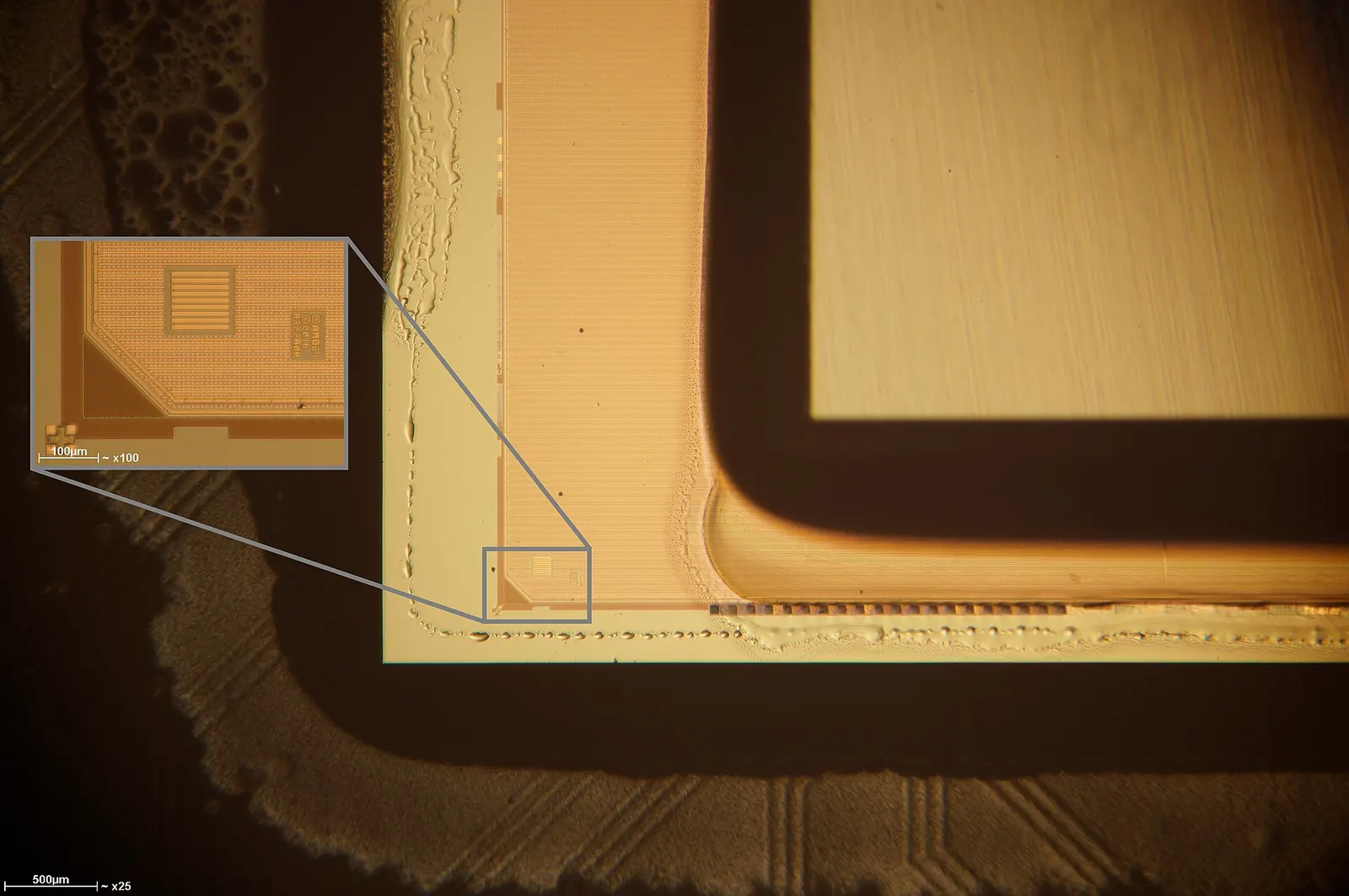
Key facts
- GlobalFoundries and TSMC agreed a $2 billion, five-year deal for silicon interposers made at Malta, New York.[1][2][3]
- Volume production at Malta is expected to ramp in the first half of 2028.[1][2][3]
- GlobalFoundries expects Malta to become the first U.S.-based source of silicon interposers for advanced packaging.[2][3]
- Reuters said advanced packaging has become a major constraint on AI chip production.[2]
- GlobalFoundries reported Q2 revenue of $1.79 billion, up 9% sequentially; TSMC reported Q2 revenue of $40.2 billion.[1]
- TSMC reported September revenue of NT$511.86 billion, up 54.6% year over year.[4]
GlobalFoundries has agreed to make silicon interposers for TSMC at its Malta, New York, fab in a deal worth $2 billion over an initial five years. The companies announced the arrangement on October 8, and Manufacturing Dive reports that it is meant to establish a U.S.-based supply of interposers for TSMC's chip-on-wafer-on-substrate, or CoWoS, packaging system. Volume production at Malta is expected to ramp in the first half of 2028.
The headline number is modest next to the capital budgets of the AI industry. The significance lies in where the money lands: not on the leading-edge transistor, but on the packaging step that increasingly decides how many AI accelerators the world can actually ship.
What an interposer does
An interposer is a slab of silicon that sits beneath processors and memory chips inside an advanced package and lets them talk to each other at high speed, as Reuters describes it. In a CoWoS package, the interposer is the shared floor on which a processor and its stacks of high-bandwidth memory are mounted side by side. Manufacturing Dive describes CoWoS as TSMC's 2.5D packaging technology, which integrates multiple chips and high-bandwidth memory stacks and which TSMC positions as a foundation for high-performance computing and AI products.
Reuters put the context bluntly: advanced packaging has become a major constraint on AI chip production, with demand exceeding the manufacturing capacity available. That framing explains why a foundry known for mature and specialty processes is being paid to build a passive-looking component. When the scarce item is the finished package rather than the die, any additional source of a package ingredient has strategic value.
What the deal actually contains
The public terms are narrow. GlobalFoundries will provide manufacturing services and fabrication capacity at Malta, and it says it will expand the facility's capacity. According to Evertiq, the company expects Malta to become the first U.S.-based source of silicon interposers for advanced packaging, including embedded deep trench capacitor components. The initial term is five years, and the agreement provides a framework for adding capacity as demand grows.
Ed Kaste, GlobalFoundries' senior vice president for its CMOS business, said advanced packaging is "critical to delivering the performance, power efficiency and scale required for next-generation AI systems," and described the arrangement as a "secure, scalable source of essential advanced-packaging elements," according to Evertiq's account of the announcement.
What is missing matters as much. Neither company has disclosed pricing or the capacity committed under the contract, and the sources reviewed do not name the end customers whose accelerators will use the parts. Whether the $2 billion is a floor, a ceiling or a forecast is not stated in the reporting. Readers should treat the figure as the companies' headline description of the agreement, not as audited revenue.
Why it matters to both companies
For GlobalFoundries, the deal adds a large, multiyear anchor customer in the part of the market that is growing fastest. Manufacturing Dive reports that the company posted second-quarter revenue of $1.79 billion in August, up 9% sequentially, with communications infrastructure and data center revenue up 60% from a year earlier. On that base, a contract averaging on the order of $400 million a year, if spread evenly, would be meaningful but not transformative. The even-spread assumption is this analysis's arithmetic, not a disclosed schedule. Reuters reported that GlobalFoundries shares rose about 4% in premarket trading on the news.
For TSMC, the logic is capacity and geography. Manufacturing Dive reports TSMC's second-quarter revenue at $40.2 billion, up more than 33% from a year earlier and 12% from the prior quarter, and quotes chief financial officer Wendell Huang pointing to strong demand for its leading-edge process technologies. A Tech Startups roundup of the week's news cites TSMC's September revenue at NT$511.86 billion, up 54.6% from a year earlier though 0.6% lower than August. Demand is not slowing, and an outside source for a CoWoS input lets TSMC add capacity without building every piece itself.
The deal also fits TSMC's broader American footprint. Manufacturing Dive notes that in July the company said it would spend an incremental $100 billion on four more Arizona facilities, bringing its total U.S. investment to $265 billion across 12 sites. A U.S. interposer source is one piece of a domestic chain that would still need packaging and assembly capacity nearby to close the loop. Nothing in the announcement says where finished CoWoS packaging for U.S.-made chips will happen.
What to watch
The first question is timing. A ramp in the first half of 2028 is a long way off by AI-hardware standards, where product generations turn over in roughly a year. The deal therefore reads as a bet on packaging demand staying strong through the end of the decade, not a fix for near-term shortages.
The second is technical scope. The mention of embedded deep trench capacitors suggests Malta's output is not limited to plain wiring layers; capacitor structures embedded in the interposer are a way to improve power delivery close to the processor. The announcement does not specify which interposer designs or sizes will be built, and larger packages are harder to manufacture.
The third is policy. Manufacturing Dive notes that GlobalFoundries has struck other agreements this year with the U.S. Department of Commerce, the Department of Energy and Renesas Electronics. The articles reviewed do not say whether federal incentives are attached to this particular contract, and no such link should be assumed.
The fourth is whether other packaging inputs follow. Substrates, memory stacking and final assembly are each potential bottlenecks, and a single interposer source does not make the supply chain domestic. If more of those steps are announced for U.S. sites, the geography of AI hardware will shift more than any single contract can achieve.
For now, the agreement is best read as a capacity signal. Packaging, once a back-end afterthought, is being contracted for in multibillion-dollar, multiyear blocks, and the buyer of the scarcest input is shopping outside its own walls to secure it.


