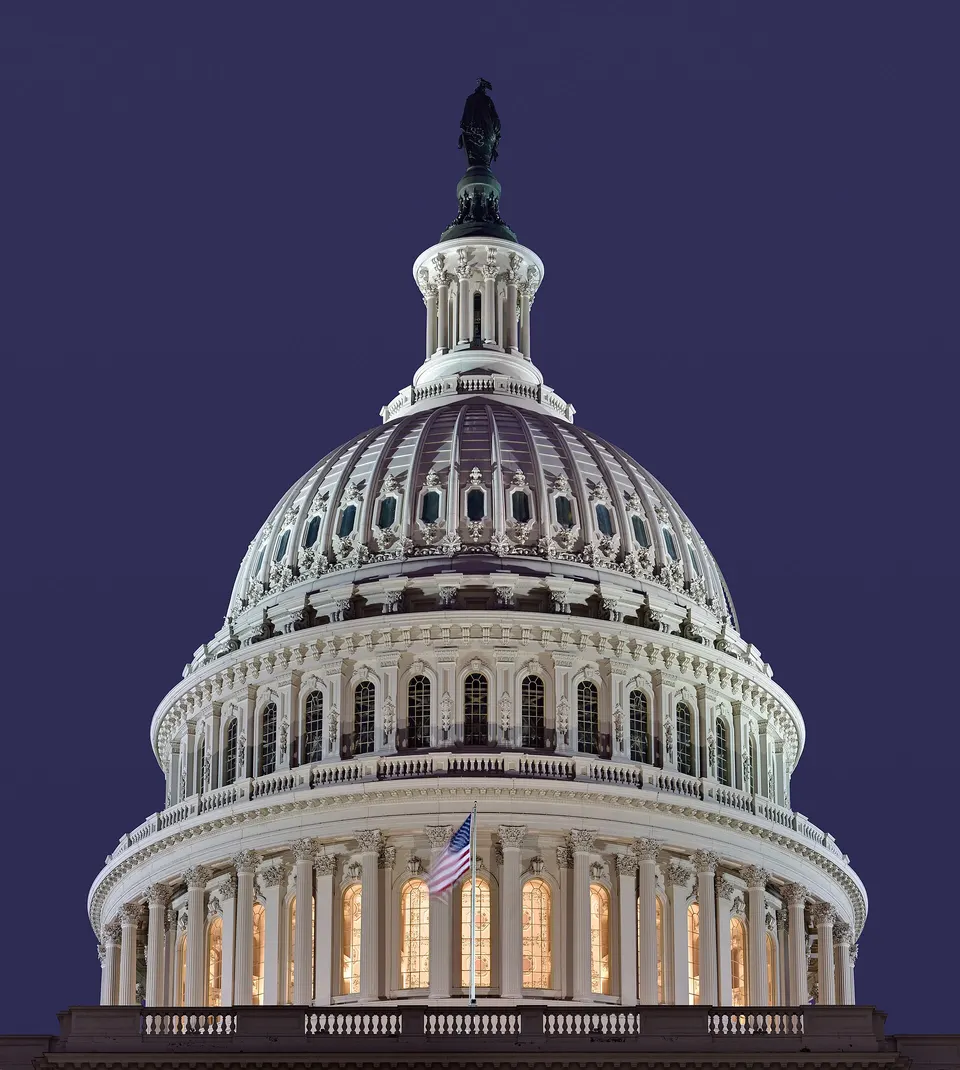
Senate Blocks Crypto Clarity Act Over Ethics Fight
A 50-49 procedural defeat leaves the industry without its federal market-structure framework and ties crypto policy to Trump-era conflicts concerns.
Key facts
- The Senate rejected the motion to advance H.R. 3633 by a 49-50 vote on September 15, 2026, with 60 votes required.[1]
- The vote represented a major setback for a comprehensive federal cryptocurrency framework and reflected Democratic concerns about Trump-related crypto interests.[2]
- Democratic senators argued that the bill’s ethics provisions and safeguards against conflicts of interest were insufficient.[3][4]
- The bill would have established a regulatory framework involving the SEC and CFTC.[1][2]
The U.S. Senate on Tuesday, September 15, blocked the Digital Asset Market Clarity Act from advancing, dealing a major setback to the cryptocurrency industry’s effort to establish a federal regulatory framework. The procedural motion failed 50-49, short of the 60 votes required to move forward. (senate.gov)
The bill, known as the Clarity Act, would have divided oversight of digital commodities between the Securities and Exchange Commission and the Commodity Futures Trading Commission. Supporters argued that clearer jurisdiction could reduce years of enforcement uncertainty and give crypto companies a more predictable path to operate in the United States.
What changed
Republican leaders brought the legislation to the floor after months of negotiations and revisions. The updated proposal included ethics-related provisions intended to address Democratic concerns about President Donald Trump’s extensive crypto business interests and those of his family. Those changes were not enough to secure the bipartisan support needed for cloture.
Democrats said the ethics language remained too weak and objected to provisions they viewed as insufficiently protective against conflicts of interest, money laundering and illicit finance. Several senators also raised concerns about whether the CFTC would have enough staffing and authority to enforce the proposed regime. Senator Elissa Slotkin said the bill contained useful bipartisan elements but did not adequately address officials’ ability to profit from digital assets. (slotkin.senate.gov)
The vote was not a final rejection of crypto regulation. It was a vote on whether to begin formal consideration. Still, the result makes passage during the current congressional session considerably more difficult, especially as lawmakers approach an election-year calendar and the parties remain divided over the Trump administration’s relationship with the industry.
Why it matters
The defeat preserves the regulatory ambiguity that crypto firms have spent years trying to end. Without a market-structure law, disputes over whether particular tokens are securities or commodities will continue to be resolved through agency actions, litigation and piecemeal rulemaking. That uncertainty affects exchanges, brokers, stablecoin issuers, token projects and financial institutions considering digital-asset services.
The vote also shows that crypto’s political influence has limits. Industry executives and lobbyists made federal legislation a central priority, but the president’s commercial ties to digital assets changed the debate from a technical question about agency jurisdiction into a broader test of public ethics. That dynamic could make future negotiations harder even if both parties agree that regulation is needed.
For markets, the immediate effect may be less dramatic than the political headline. Investors had already treated near-term passage as uncertain, and the bill’s failure does not alter existing rules overnight. The larger consequence is strategic: U.S. crypto businesses must continue operating without the comprehensive framework they say is needed to compete globally.
The next question is whether negotiators return with a narrower bill focused on agency jurisdiction, or attempt to rewrite the ethics provisions first. Until that happens, the Senate’s 50-49 vote leaves crypto policy in limbo rather than settled.