Wall Street Ends October With Its Worst Day Since June as Amazon and Intel Reignite AI Spending Doubts
The Nasdaq fell 2.9% and the S&P 500 1.8% on 30 October, but gains in energy and staples show investors are repricing AI spending, not leaving equities.
Key facts
- The Nasdaq Composite fell 2.9% to about 25,437 on 30 October 2026, the S&P 500 lost 1.8% to about 7,580 and the Dow slipped 1.1% to about 51,770.[2][1]
- Intel guided fourth-quarter 2026 revenue of $15 billion to $16 billion and adjusted earnings of 25 cents a share, below analyst expectations of about $17.1 billion and 43 cents, and its shares closed down about 28.6%.[4][3][5]
- Amazon reported trailing-twelve-month free cash flow of negative $42.4 billion and kept its roughly $220 billion 2026 capital-expenditure forecast, even as AWS revenue rose 39.3% to $46 billion.[4][3]
- The Nasdaq lost about 5% in October 2026, its worst month since March 2025, while the Dow gained 1.5%.[2]
- The 10-year Treasury yield fell to 4.93% from 4.98% on 30 October, according to the Associated Press.[1]
U.S. stocks ended October with their worst day since June on Friday, 30 October 2026, as disappointing results from Amazon and Intel renewed doubts about whether heavy artificial-intelligence spending will pay off. The Nasdaq Composite fell 2.9% to about 25,437, the S&P 500 lost 1.8% to about 7,580 and the Dow Jones Industrial Average slipped 1.1% to about 51,770, according to Yahoo Finance's market coverage.
The session is notable less for its size than for its shape. The damage was concentrated in technology, while energy and consumer-staples shares rose. The market is punishing the cost of the AI build-out without yet abandoning the rest of the equity rally.
What happened on Wall Street on 30 October?
The Associated Press reported that the S&P 500 fell 1.8%, its worst day since June, and was on a third straight weekly loss, though at its worst point it was only about 3.4% below its all-time high. The Nasdaq's 2.9% drop was the largest of the three main indexes. Over the month, Yahoo Finance reported, the Nasdaq lost about 5%, its worst month since March 2025, while the S&P 500 slipped 1.2% and the Dow gained 1.5%.
The sell-off was not market-wide. The AP noted that outside technology many companies rallied on stronger-than-expected summer profits and that nearly as many S&P 500 stocks rose as fell. StockTitan's session summary put a Russell 2000 proxy ETF down 1.65%, against 3.47% for a Nasdaq-100 proxy.
Why did Intel and Amazon move the market?
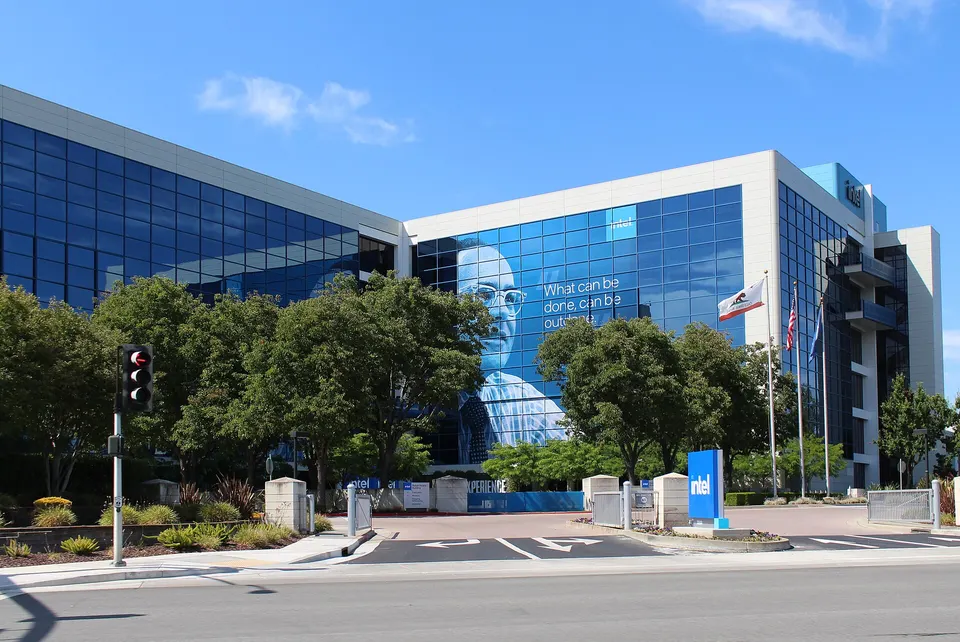
Intel was the sharpest casualty. It reported third-quarter revenue of $16.5 billion, up 21% from a year earlier, and said revenue, gross margin and earnings per share beat its own guidance, according to ITmunch's account of the results. Its fourth-quarter outlook was far weaker: revenue of $15 billion to $16 billion and adjusted earnings of 25 cents a share, against analyst expectations of about $17.1 billion and 43 cents. Its finance chief said the personal-computer slowdown could last through at least the first half of 2027. Shares closed down about 28.6%, which StockTitan described as the stock's worst day since 1974.
Amazon's stock fell less, 1.4% to 1.9% depending on the source, but its figures fed the same worry. ITmunch reported third-quarter net sales of $201.9 billion, up 12%, with Amazon Web Services revenue of $46 billion, up 39.3%, its fastest growth in nearly five years. The cloud business was not the problem. Free cash flow was: Amazon's trailing-twelve-month free cash flow was an outflow of $42.4 billion, against a $14.8 billion inflow a year earlier, and purchases of property and equipment rose $94.8 billion, which Amazon said primarily reflected AI investment. It kept its forecast of about $220 billion of 2026 capital expenditure.
The AP added that Alphabet had fallen more than 12% on Thursday, its worst day on record, after reporting greater cash burn over the summer. Nvidia fell 4.9% on Friday and was the heaviest drag on the S&P 500, more than Intel. A closely watched chipmaker index fell 7.2%, according to CNN as cited by StockTitan.
What does the "show me" phase mean for investors?
The common thread is cash. For two years the market rewarded companies for announcing larger AI budgets. This week's results put the other side of the ledger in view: heavy cash burn at Amazon and Alphabet, and an Intel forecast that shows AI-server demand is not offsetting weakness in PCs.
Joe Tigay, a portfolio manager at Equity Armor Investments, told clients, as quoted by the AP: "We're moving out of the hopes and dreams phase of the AI trade and into the 'show me' phase." Keith Lerner of Truist, quoted by Yahoo Finance, described the sell-off as possibly a reset rather than a broad collapse and said "the longer-term tech uptrend remains intact."
The views are compatible. ITmunch made the same point, arguing that one day of declines does not show AI demand has collapsed and that the concern is how quickly spending will generate returns. Amazon does not disclose how much of its cloud revenue comes from AI workloads, so investors must judge returns from capital spending rather than reported AI revenue.
How did bonds, oil and crypto fit in?
Other pressures arrived at once. The AP said the 10-year Treasury yield fell to 4.93% from 4.98% late Thursday and from above 5.30% earlier in October, a sign investors sought safer assets. Brent crude rose 2.4% to $113.43 a barrel, near the high end of its range since the war with Iran began, the AP said.
Interest rates are a second stress for companies that borrow to build data centres. Yahoo Finance said two Fed officials had signalled that rates may need to rise further and that a December hike is now widely expected. The AP noted that high rates may slow data-centre buildouts, pressuring chip stocks.
Crypto added to the risk-off tone. The AP reported that a hack at Binance hit more than $6 billion of crypto and that a U.S. blockchain intelligence firm said a North Korean unit was likely responsible. That attribution is the firm's assessment, not a confirmed finding. Bitcoin fell below $77,000 from more than $86,000 earlier in the month, and Coinbase fell 13.6% despite stronger-than-expected results.
Which companies gained?
ExxonMobil rose 1.8% and Chevron 1.7% after beating profit expectations, the AP said. Mondelez gained 4% on stronger growth and Colgate-Palmolive rose 2.9% as higher prices lifted revenue and profit above expectations. A Nasdaq down about 5% in October alongside a Dow up 1.5% describes a rotation inside the market, not a flight from it.
What to watch next
Two variables will decide whether Friday was a reset or the start of something larger. The first is the next round of capital-spending disclosures from the large cloud providers, which will show whether Amazon's roughly $220 billion plan remains the template. The second is whether Intel's promised foundry customers appear: on the earnings call, chief executive Lip-Bu Tan said the company expects "a couple of customers ready to announce the next two quarters," according to LavX News citing CNBC.
What we don't know yet
Sources disagree on the size of Amazon's share-price decline. None of the coverage reviewed establishes how much of the Nasdaq's fall came from AI-specific fundamentals versus rate fears, oil prices and the crypto shock. The Binance attribution has not been confirmed by authorities in the reports reviewed. One down day, even a large one, is a thin basis for calling a trend: the S&P 500 finished the month only 1.2% lower.