Erdogan and Zelenskyy Agree to Work on Black Sea Grain Corridor as US Weighs Limited Ceasefire
Turkey, the United States and Canada are pressing for a narrow Black Sea truce on grain and energy shipping, but Russia has not publicly responded and the wider war continues.
Key facts
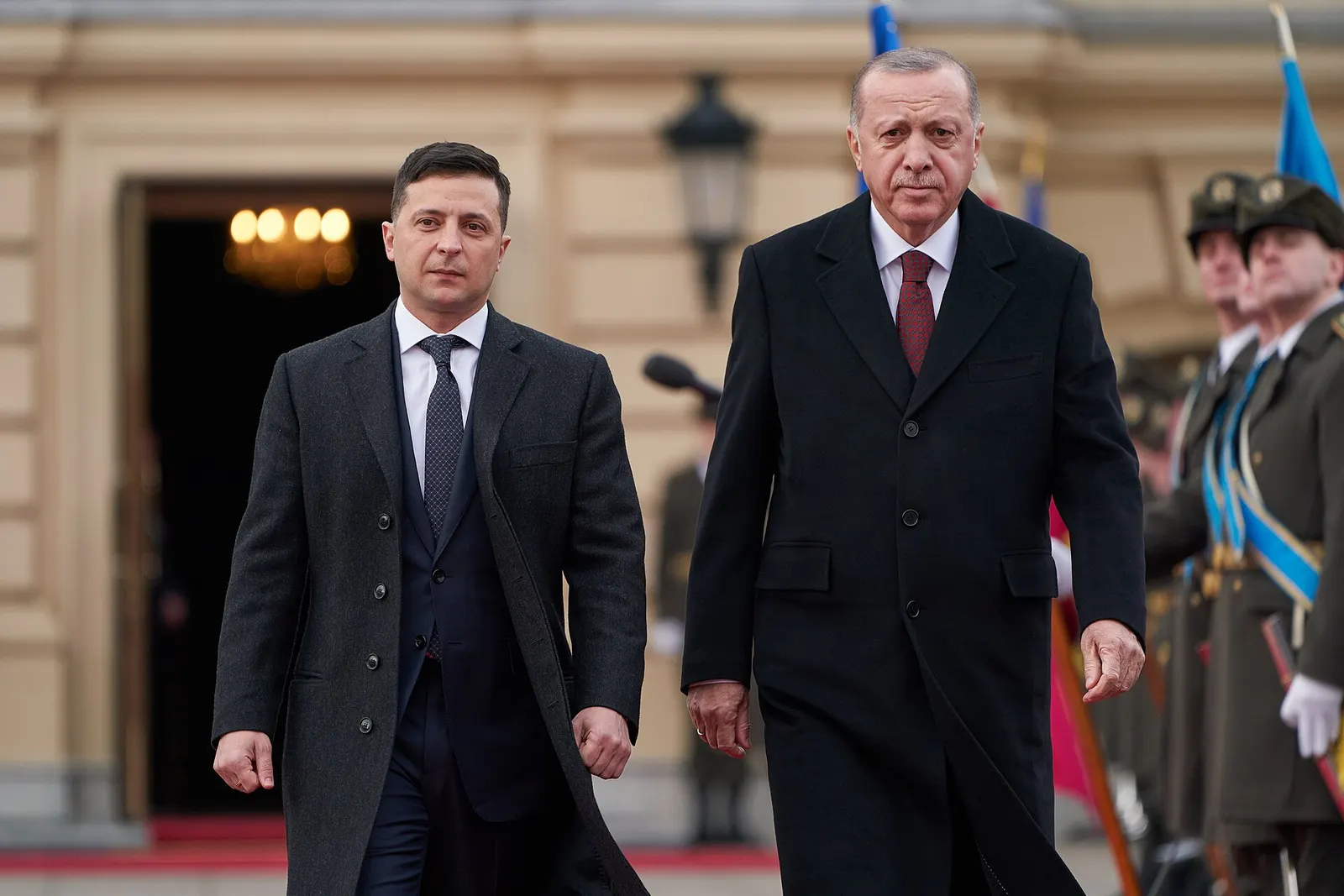
- Turkish President Recep Tayyip Erdogan and Ukrainian President Volodymyr Zelenskyy agreed in Istanbul on 31 October 2026 to work on a new Black Sea grain corridor.[1]
- US Secretary of State Marco Rubio said on 31 October that the United States is reviewing proposals from Turkey and India to get grain shipments moving and sees growing interest in a limited Black Sea ceasefire.[2]
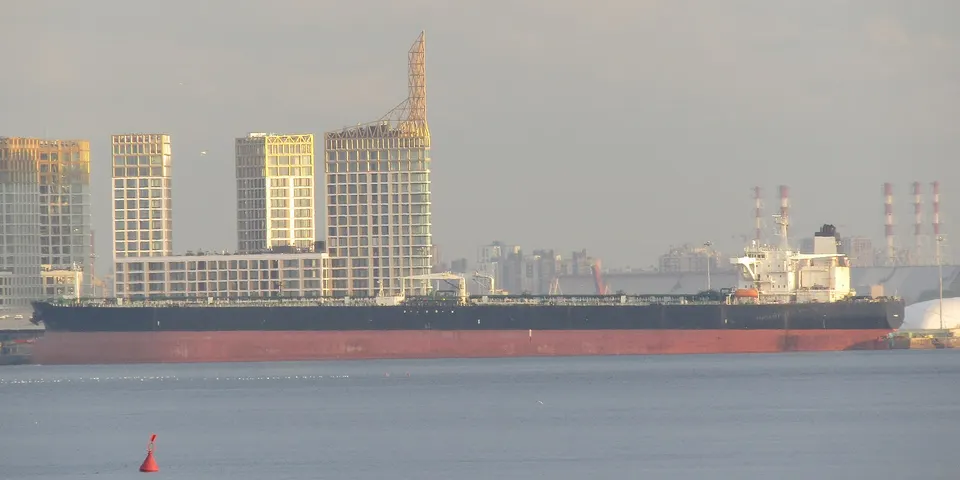
- The Liberian-flagged container ship Contship Jet was struck by drones in Bulgaria's exclusive economic zone on 28 October, and Al Jazeera's report did not say who launched them.[1]
- Russian Foreign Minister Sergei Lavrov said on 30 October that Ukraine's long-range strikes are an obstacle to peace talks, a claim the Institute for the Study of War said ignores Russia's own strike campaign.[3]
- The Institute for the Study of War said the localized Oleshky ceasefire in Kherson Oblast has largely held since 27 October, though Ukrainian and Russian officials have each alleged violations it could not verify.[3]
Turkish President Recep Tayyip Erdogan and Ukrainian President Volodymyr Zelenskyy agreed on 31 October 2026 to work on a new Black Sea grain corridor, while US Secretary of State Marco Rubio said the same day that international interest is growing in a limited Black Sea ceasefire covering grain and energy shipments. Neither Russia nor Ukraine has acted on a Turkish proposal to end attacks on shipping, according to Al Jazeera, and Moscow has not publicly endorsed any maritime truce.
What was said in Istanbul and Atlanta?
At a joint news conference in Istanbul on Saturday, Erdogan urged both sides to stop attacking civilian vessels in the Black Sea. Al Jazeera reported that he called such attacks unacceptable "regardless of who carries them out" and said talks to restore safe navigation would continue. He argued that a shipping deal could also help wider efforts toward a lasting peace in Ukraine.
Zelenskyy, for his part, accused Russia of making the situation in the Black Sea difficult, according to the same report. He said he had reached an agreement with Erdogan to work on the grain corridor and that Turkey supports safe navigation.
In Atlanta, Rubio spoke at a news conference on the sidelines of a G20 foreign ministers' meeting, Reuters reported. He said the United States is reviewing proposals from Turkey and India to get grain shipments moving. A Black Sea arrangement, he said, "doesn't solve the war, but at least it solves a unique aspect of it." He added that a comprehensive negotiated settlement was "not on the immediate horizon."
What triggered the push?
Attacks on commercial shipping have put third countries at risk. Al Jazeera cited one recent incident: the Liberian-flagged container ship *Contship Jet* was struck by drones inside Bulgaria's exclusive economic zone on 28 October. The report did not say who launched the drones, and no party quoted in the coverage reviewed here claimed responsibility.
Canada's foreign minister, Anita Anand, framed the issue in legal and seasonal terms. According to Reuters, she said she confronted Russian Foreign Minister Sergei Lavrov in a closed-door session on Friday over Russia's invasion, the abduction of Ukrainian children and what she called Russian targeting of Ukrainian ships in the Black Sea, which she described as contrary to international law. She said she had discussed a limited Black Sea ceasefire with Ukrainian Foreign Minister Andrii Sybiha and her Indian counterpart. "We have to address these issues now as Ukraine approaches the winter," Anand said. She added that India and Egypt were heavily affected and want their ships and sailors kept safe, that Ukraine is fully engaged, and that Russia has not shown it is willing to move ahead.
What is Russia's position?
The coverage reviewed contains no direct Russian statement on a Black Sea ceasefire. Reuters reported that Lavrov said on Friday that Moscow's position on the Ukraine conflict is unchanged and that Russia cannot accept Ukraine as a military threat to its security interests. On 30 October, according to the Institute for the Study of War (ISW) in its 31 October assessment, Lavrov also claimed that Ukraine's long-range strikes are an obstacle to peace talks. ISW's analysts said that claim ignores Russia's own strike campaign. ISW also said the Kremlin continues to reject proposed ceasefires and moratoriums, including one on long-range energy strikes. The Kremlin, for its part, has said the next round of Russia-Ukraine-US talks is planned to resume in November in the United Arab Emirates, as Al Jazeera noted.
How is the battlefield backdrop shaping talks?
Fighting continued as diplomats met. ISW reported that Russia launched 134 drones, 72 of them jet-powered, overnight on 30 to 31 October, and 168 drones and loitering munitions, 51 of them jet-powered, during the day on 31 October. Moscow Mayor Sergei Sobyanin claimed Russian air defences intercepted 19 Ukrainian drones targeting Moscow Oblast overnight. Ukrainian sources said two oil refineries in Ufa were hit on 31 October, which ISW assessed as likely based on Astra reporting and geolocated footage. These figures are claims from the parties or from ISW's analysis, and most could not be independently confirmed for this article.
A local truce offers a small test of what narrower deals can achieve. ISW said a humanitarian mission and localized ceasefire around Oleshky in Kherson Oblast has largely held since 27 October, with limited allegations of violations. Ukrainian Southern Group spokesperson Maksym Kravchuk said Russian forces violated it, including with reconnaissance drones and explosives dropped from drones, and that Russia used the pause to rotate personnel and strengthen positions. Russian official Rodion Miroshnik claimed a Ukrainian drone struck a civilian vehicle near Oleshky on 31 October. ISW could not verify either side's allegations.
Why does a limited ceasefire matter?
The case for a maritime truce rests on who bears the costs. Rubio and Anand both said that grain and energy shipments by Russia and Ukraine are at stake, and Anand noted that India and Egypt are among the countries most affected. A narrow arrangement would not settle territory, security guarantees or sanctions, the issues Rubio said remain out of reach. That limited ambition is also its attraction, since both capitals could in principle accept it without conceding their wider positions.
The obstacles are equally concrete. A shipping truce needs verification of who is firing at vessels, and the available reporting does not attribute the 28 October strike. It would also need Russia to agree. Reuters noted that the G20 ministerial ended without a joint statement, with European and Canadian officials objecting to Lavrov's attendance as normalizing Russian aggression, while Rubio defended the invitation by arguing that ending the war diplomatically requires talking to Russia.
What happens next?
Several dates frame the next weeks. Technical-level talks between Russia, Ukraine and the United States are expected in the UAE in November, according to the Kremlin. Rubio said he briefly spoke with Lavrov about a possible Trump-Putin meeting at APEC next month and the G20 leaders' summit in Miami in December, with no firm commitment from Putin to attend.
What is still unknown?
Several points remain unconfirmed: who struck the *Contship Jet*, whether Russia will entertain a maritime ceasefire, what the Turkish and Indian proposals contain, and whether the Oleshky truce can survive the cross-allegations. Until Moscow responds publicly, the Black Sea initiative remains a set of proposals backed by Turkey, the United States, Canada and Ukraine rather than an agreement.