Google Commits $17 Billion to Wyoming Data Centre Powered by 702 MW Gas Fuel Cells With Carbon Capture
Google says it will pay for all the power it uses at its first Wyoming campus, a pledge made two days after voters rejected most local data-centre measures and before key emissions figures are disclosed.
Key facts
- Google announced on 5 November 2026 a $17 billion long-term investment in its first Wyoming data centre, in Laramie County near Cheyenne.[1][2]
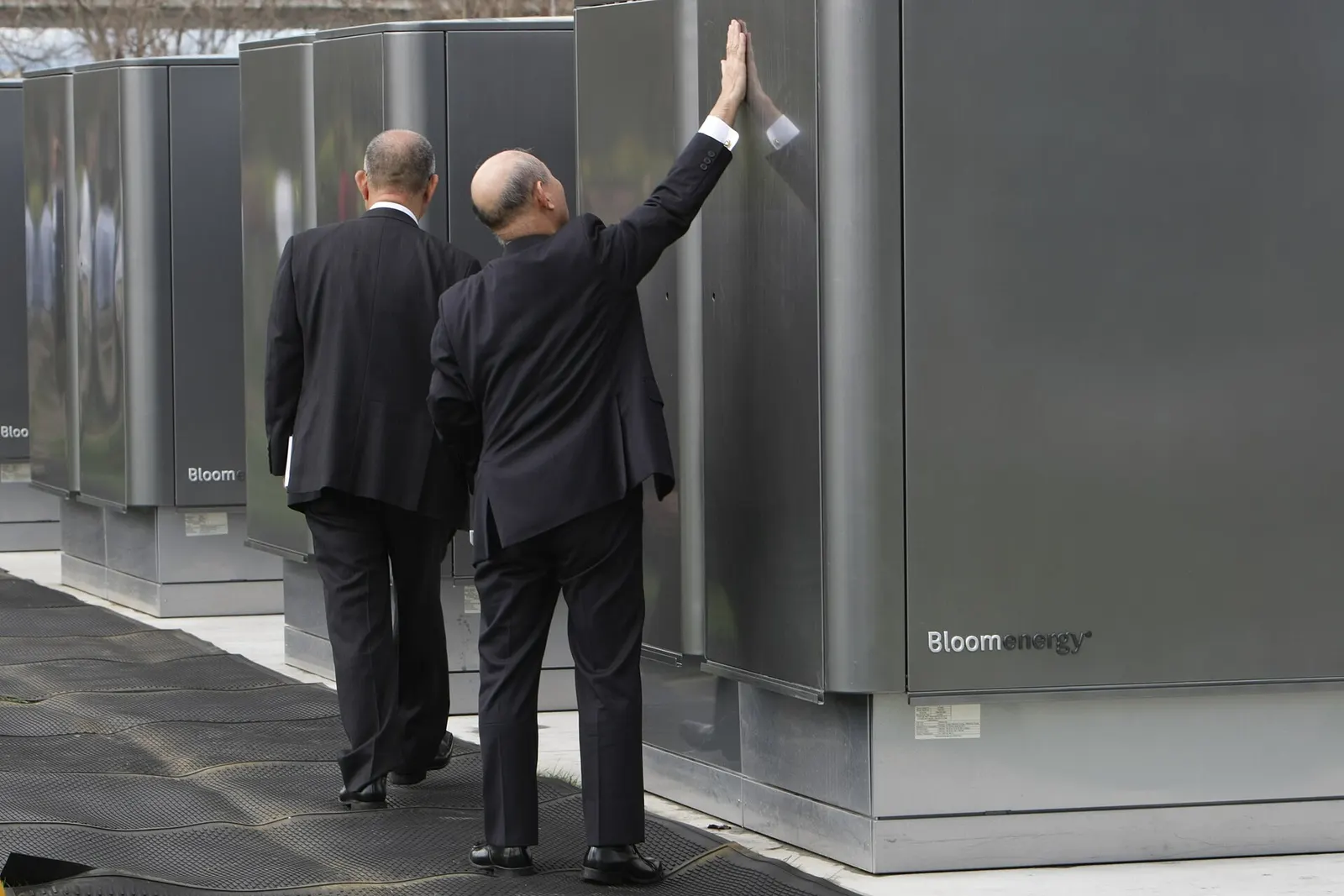
- Google contracted American Electric Power for a 702 MW natural-gas fuel-cell development with carbon capture and storage, with Bloom Energy supplying the fuel cells.[1][3]
- Google says it will pay for 100% of the power it uses at the Wyoming campus and will cool the facility with air rather than water.[1][3]
- Google’s contracted carbon-capture power capacity reaches nearly 1 GW with the Wyoming project, according to the company’s announcement.[1][2]
- The Next Web reported that Google gave no percentage for emissions removal and described only a large majority of the plant’s emissions as captured.[2]
- Semiconductor Engineering reported that US election results raised concerns about tighter data-centre restrictions in Texas and Ohio.[4]
Google said on 5 November 2026 that it will build its first Wyoming data centre in Laramie County, near Cheyenne, as a $17 billion long-term investment, and that the campus will draw on a 702 MW natural-gas fuel-cell plant fitted with carbon capture and storage. According to Google's announcement, written by Steve Walter, vice president of global infrastructure and energy, the company "will pay for 100% of the power we use."
The announcement landed two days after US midterm voters rejected data-centre projects in a large majority of local ballot measures, which makes the power and water pledges as much a political document as an engineering one.
What Google announced
The campus is being developed with Tallgrass Energy, Black Hills Energy, American Electric Power (AEP) and Related Digital, Google said. At its centre is a fuel-cell development that AEP has contracted: 702 MW, run on natural gas, with Bloom Energy supplying the fuel cells. Google calls it the largest planned development of its kind. Carbon captured from the plant is to be stored permanently underground at Tallgrass's nearby Eastern Wyoming Sequestration Hub.
Google also said it is buying power from gas generators operated by Tallgrass and Black Hills, and is funding a front-end engineering and design study on adding carbon capture to Tallgrass's combined-cycle turbines. With the Wyoming plant, the company's contracted carbon-capture capacity reaches nearly 1 GW, building on its first such project in the United States, announced a year earlier.
Google's post commits to three things that are aimed squarely at local objections. It says it will pay for the grid upgrades "directly driven by our growth." It says the facility will be air-cooled to limit strain on water supplies. And it expects "hundreds of millions of dollars" in local property taxes for Laramie County and School District 1. Google said it met more than 200 residents in Cheyenne and is forming a Community Council with its partners and Bloom Energy.
What the numbers do and do not say
Google's own post gives no gigawatt figure for the campus, no construction timeline and no in-service date, and it does not say whether the $17 billion includes spending by the utilities and pipeline partners. Other reporting fills some of the gaps, but it is secondary and should be read that way.
The Next Web reported that AEP said in October it would spend about $4 billion on the fuel-cell plant, that Google will buy its output under a 20-year agreement, and that the plant should be fully operational by the end of 2028. The same article said Google describes only "a large majority" of the plant's emissions as being removed, without giving a percentage. That matters: a carbon-capture rate has not been disclosed, so the climate profile of a gas-fired campus cannot yet be judged.
FourWeekMBA pointed to earlier Laramie County planning filings and Cowboy State Daily coverage from July. These described a 716-acre campus, then called Project Tembo, with an initial 2.7 GW draw and a ceiling of about 10 GW. If those filings are accurate, the 702 MW fuel-cell plant would cover roughly a quarter of the initial load, a ratio FourWeekMBA calculated itself and Google has not confirmed. FourWeekMBA also cited Black Hills's October disclosure of $1.8 billion for 564 MW of company-owned gas generation for Google from 2027 to 2029, and cautioned that these figures should not simply be added together.
Why the politics matter as much as the power
The Next Web noted that US voters backed restrictions in 40 of 41 local data-centre ballot measures two days before the announcement, and that the news followed a $15 billion Malaysia data-centre plan announced on 4 November. It did not name the measures or locations in the passage reviewed, so the breadth of that result should be treated with care until the individual votes are documented.
Water is a particular sore point in Cheyenne. According to The Next Web, the city halted some data-centre water discharges in July after a Meta contractor released a rare bacterium into the wastewater reuse system. Air cooling is therefore not a technical footnote in this project; it answers a specific local grievance.
The wider market is also watching. Semiconductor Engineering's weekly review said US election results "raised concerns about tighter restrictions on data center development," particularly in Texas and Ohio, and warned that restrictions delaying or reducing construction "could weaken demand for AI accelerators, HBM, and networking chips." Google's response, in effect, is to internalise the costs that residents object to: its own power, its own grid upgrades, its own cooling choices.
Why gas with carbon capture
The structure reflects a constraint that is now common to the largest campuses. Grid interconnection is slow, and large new loads face queues and rate disputes. By contracting a dedicated generation project and promising to pay for what it uses, Google is trying to avoid the accusation that households subsidise its demand. Fuel cells that burn natural gas, paired with a sequestration hub already operating in the same part of Wyoming, give it a generation source that does not wait for the transmission grid.
The trade-off is scale. Google describes the 702 MW project as the largest of its kind planned to date, so capture performance and storage permitting remain open variables.
What we don't know yet
Several material facts are unconfirmed. Google has not published a detailed breakdown of the $17 billion, the campus's total power demand, the share of that demand the fuel cells will meet, or a completion date. Sources differ on whether the 2.7 GW figure is a design capacity including reserves or an initial draw, and the 10 GW ceiling comes from earlier filings rather than from Google's announcement.
What happens next?
The near-term tests are regulatory and local. The Community Council will be the first formal venue for objections, and the carbon-capture permitting and storage arrangements at the Eastern Wyoming Sequestration Hub will decide whether the emissions claim holds. Utilities will have to show that the 2028 operating target for the fuel-cell plant is realistic.
For the industry, the Wyoming template, in which a developer pays for its own power, funds the grid work, avoids water-intensive cooling and offers community funding, is likely to be copied, because it directly answers what voters have just objected to. Whether it satisfies them depends on numbers that Google and its partners have not yet published.