IBM Unveils Quantum System Two in Chicago, Its First Quantum Computer in Illinois, Backed by a $25 Million State Grant
The Nighthawk-powered machine will anchor the National Quantum Algorithm Center, but IBM has published no qubit count or error rate, and a community benefits fight is brewing.
Key facts
- IBM unveiled its Quantum System Two, powered by the Nighthawk chip, at a ribbon-cutting on 6 November 2026 at Hyde Park Labs in Chicago, its first quantum computer in Illinois.[1][2][3]
- The State of Illinois provided a $25 million grant to the University of Illinois Board of Trustees on behalf of the Illinois Quantum and Microelectronics Park to cover equipment purchases and installation preparations, WJOL reported.[4]
- IBM's FutureNow Chicago hub is expected to create 750 full-time jobs by the end of 2030, and IBM would receive an estimated $19 million in state income tax credits in exchange, according to Block Club Chicago.[3]
- The Illinois Quantum and Microelectronics Park, the planned long-term home of the system, is backed by $500 million from the State of Illinois, according to IBM's research blog.[2]
- IBM's release discloses no hardware specifications for the Chicago machine beyond the Nighthawk chip name, and WJOL likewise reported no qubit count.[1][4]
- Some South Side residents have organised to seek a community benefits agreement with written commitments on jobs and development, while other groups oppose the project over environmental and gentrification concerns, Block Club Chicago reported.[3]
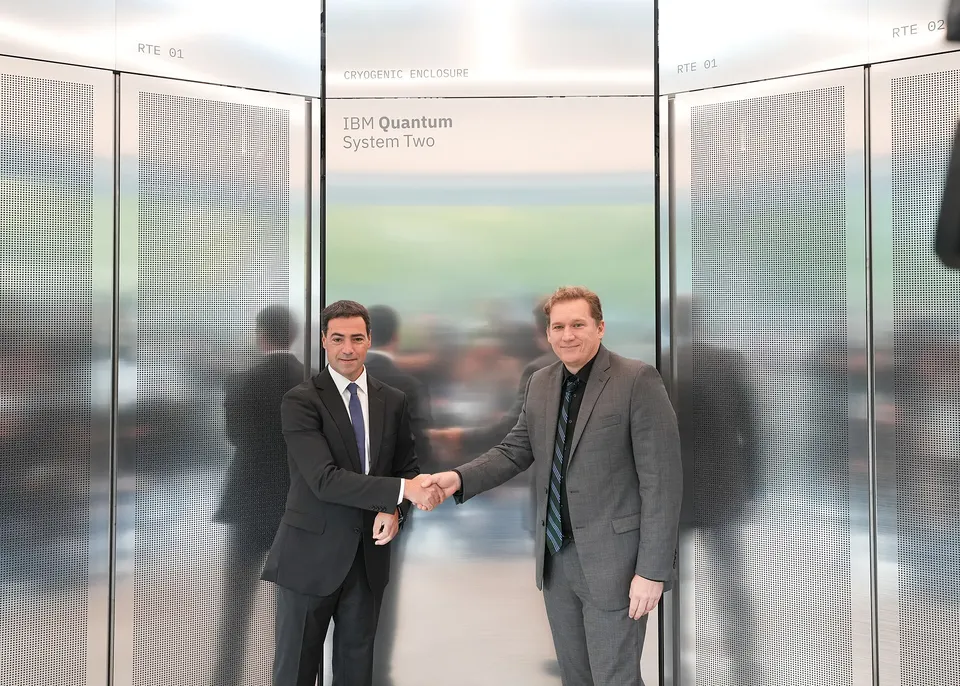
IBM unveiled its Quantum System Two in Chicago on Friday, 6 November, cutting the ribbon with Illinois Governor JB Pritzker and University of Chicago leaders on IBM's first quantum computer in the state. According to IBM's newsroom release, the machine runs on the Nighthawk processor and will anchor the National Quantum Algorithm Center, with a state grant of $25 million, reported by WJOL, covering equipment and installation preparation.
What was unveiled, and where it sits
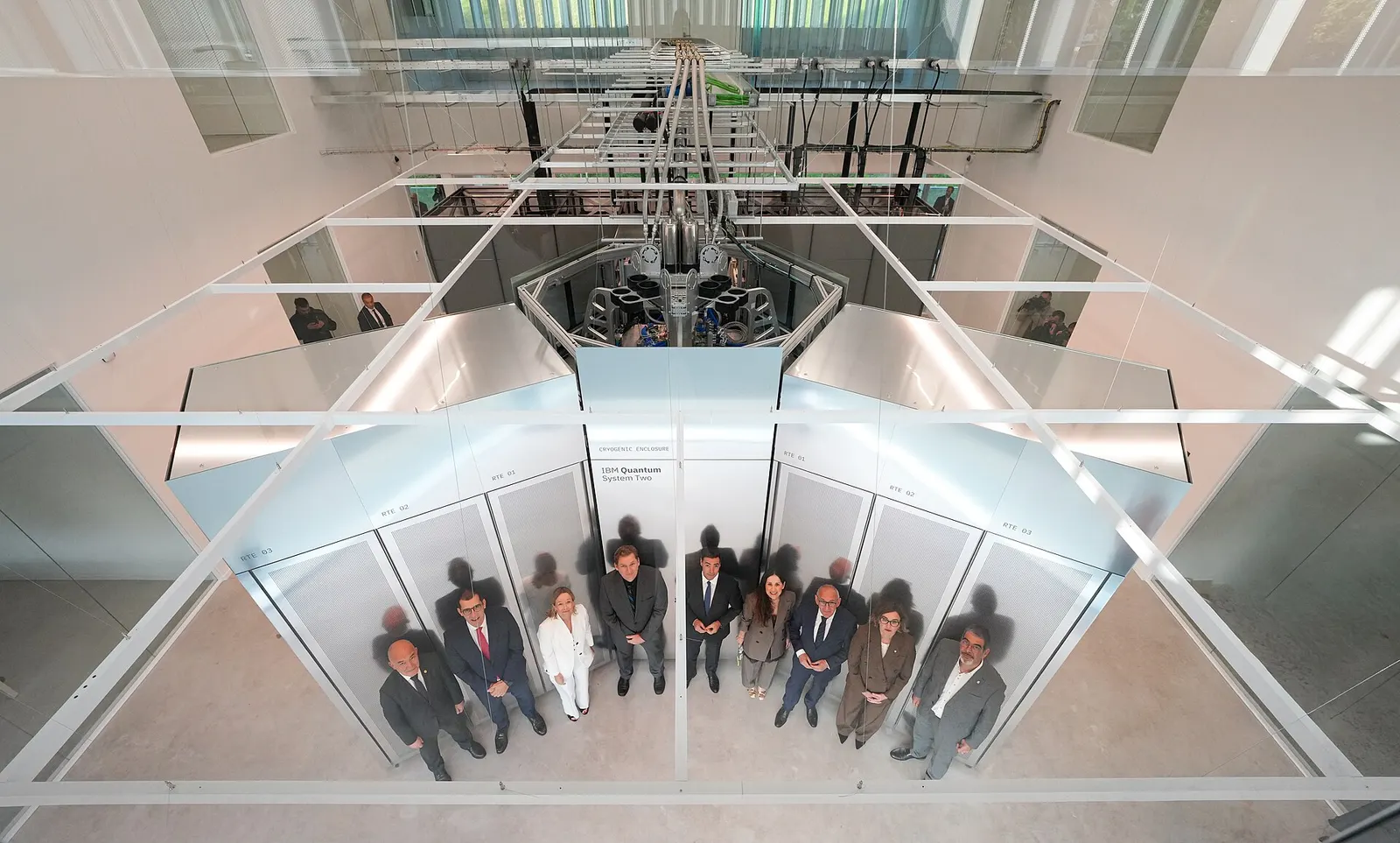
The system is installed for now at Hyde Park Labs, a University of Chicago-affiliated technology hub at 5207 S. Harper Ave., according to Block Club Chicago. It is meant to move later to the Illinois Quantum and Microelectronics Park (IQMP), a campus still under construction. IBM's release calls Nighthawk "the most powerful quantum chip IBM has ever built," and IBM's research blog identifies the processor as a Nighthawk r2.
None of the three accounts gives a qubit count, error rate or performance benchmark for the Chicago installation. IBM's release says the company disclosed no hardware specifications beyond the chip name, and WJOL likewise notes that no qubit figure was published.
The location is part of the pitch. IBM's blog quotes IQMP chief executive Harley Johnson describing the machine as "probably the most publicly visible quantum computer in the world," because passers-by, including students from a nearby public high school, can see it through the glass.
Who is paying, and for what
The $25 million state grant went to the University of Illinois Board of Trustees on behalf of IQMP, WJOL reported, and paid for equipment purchases and technical preparations for the installation. Illinois has separately committed $500 million to the IQMP campus itself, according to IBM's research blog, with support from IBM, the University of Illinois system, the University of Chicago and other partners.
IBM's own commitments are mostly about jobs. Block Club Chicago reported that IBM's FutureNow Chicago hub at the park is expected to create 750 full-time positions by the end of 2030 under an April agreement with the Illinois Department of Commerce and Economic Opportunity. In exchange, the company would receive an estimated $19 million in state income tax credits, the outlet said. Pritzker said 250 of those jobs had been filled so far, according to the same report. IBM's release says the hub will be run with City Colleges of Chicago, and WJOL adds that the colleges will support 500 apprentices over five years, with IBM hiring one-third of qualified graduates.
Taken together, the public side of the ledger is a $25 million equipment grant, a projected $19 million in tax credits and a half-billion-dollar campus, against a company pledge of 750 jobs.
What will the machine be used for?
The National Quantum Algorithm Center was established in 2024 by Pritzker, with IBM as an anchor partner.
IBM's release lists several named projects. Deloitte and AbbVie, working with IBM and Northwestern University, are building quantum molecular-simulation methods for drug discovery. The Electric Power Research Institute and the University of Illinois Urbana-Champaign are testing quantum optimisation for power grids. Fermilab is working with IBM on high-energy physics and distributed quantum computing. The blog adds that these projects came from the first five Grand Challenge awards announced in April 2026, funded by P33, Northwestern and the Discovery Partners Institute.
On the science, the strongest claim comes from IBM's blog, which describes a 2026 University of Chicago and IBM result in which a structured task, built so its answer can be verified, ran on an IBM system in about 15 minutes and outpaced leading classical simulation methods. The blog says the run used 70 logical qubits. Block Club Chicago describes the same July announcement as experiments on the Chicago system itself, while IBM's blog attributes the work to "an IBM system" without tying it to the Hyde Park machine, so the link between that result and the new installation is unclear. Claims of quantum advantage also tend to be contested by classical-computing researchers, and none of the sources reports an independent review of this one.
A second thread is the link between quantum and conventional supercomputing. The blog says the University of Illinois, the National Center for Supercomputing Applications and IBM connected the centre's DeltaAI supercomputer to an IBM quantum system and used the pairing to compute properties of Cu3C6O6, a metal with a kagome lattice. Those results are due to be presented at the SC26 conference in November.
The local politics
Not everyone in the neighbourhood is persuaded. Block Club Chicago reported that some South Side residents have organised to seek a community benefits agreement that would put commitments on jobs and neighbourhood development in writing. Other residents praised the project's economic potential, and some groups oppose the campus outright, citing environmental harm and gentrification concerns.
Supporters make a regional argument. P33 chief executive Brad Johnson forecast 177,000 quantum jobs in the Chicago region by 2035, per Block Club Chicago, a projection that is the group's own and not an official estimate. Pritzker said at the event, "I want the next generation of breakthroughs to happen in Illinois," according to IBM's release.
What we don't know yet
Several basics are still unpublished. The Chicago machine's qubit count and error rates have not been disclosed. No date has been given for the move from Hyde Park Labs to the IQMP campus, which the release describes as under construction. Block Club Chicago says details of how outside scientists and non-quantum companies will gain access, including fees and application processes, have not been spelled out. IBM Chairman and CEO Arvind Krishna said in the release that the system "can deliver scientifically useful results to organizations across the state of Illinois and beyond," a claim the first National Quantum Algorithm Center projects will have to test.
What happens next
The next public checkpoint is SC26 in November, where the Illinois team plans to present the DeltaAI hybrid results. After that, the more consequential questions are about delivery: whether the 750-job commitment is met by the end of 2030, whether the community benefits negotiations produce a written agreement, and whether projects such as the drug-discovery and power-grid work yield results that classical methods cannot match.