Oracle Will Rent Google's TPUs on Its Cloud From 2027, Widening Its Bet Beyond Nvidia
Announced at Oracle AI World on 27 October, the deal makes Oracle the first hyperscale cloud outside Google to offer TPUs, even as investors question how it will fund its data-centre buildout.
Key facts
- Oracle announced on 27 October 2026 that Google TPUs will be available on Oracle Cloud Infrastructure from 2027, the first time a hyperscale cloud outside Google has offered them.[1][2][3]
- Oracle's Karan Batta called the Google arrangement a multi-year, multi-gigawatt partnership and said Oracle will receive each new TPU on the day Google launches it.[3]
- Nvidia's Vera Rubin NVL72 systems and Vera CPUs are now generally available on Oracle Cloud Infrastructure, while HGX Rubin NVL8 systems have no release date.[2][3]
- Oracle Cloud Infrastructure revenue reached $7.4 billion in the first quarter of fiscal 2027, up 121% year on year, with remaining performance obligations of $664 billion.[1]
- Oracle's capital expenditure was $55.7 billion in fiscal 2026 and could exceed $90 billion this fiscal year, according to The Next Platform.[1]
- Oracle shares rose nearly 5% on 27 October but remain down more than 30% this year as investors question how it will fund its data centres.[3]
Oracle said on Tuesday 27 October 2026 that Google's Tensor Processing Units (TPUs) will be rentable on Oracle Cloud Infrastructure (OCI) from 2027, making Oracle the first hyperscale cloud outside Google to offer the chips, according to The Register and The Next Platform. Oracle did not say how many TPUs it will start with, and the announcement came at its AI World event in Las Vegas alongside a wider list of chip, software and OpenAI deals.
The TPU news is the most consequential item on that list. It shows how far one of the largest buyers of Nvidia hardware is willing to go to avoid depending on a single supplier, while the company's own financial position raises questions about how it will pay for the expansion.
What did Oracle actually announce?
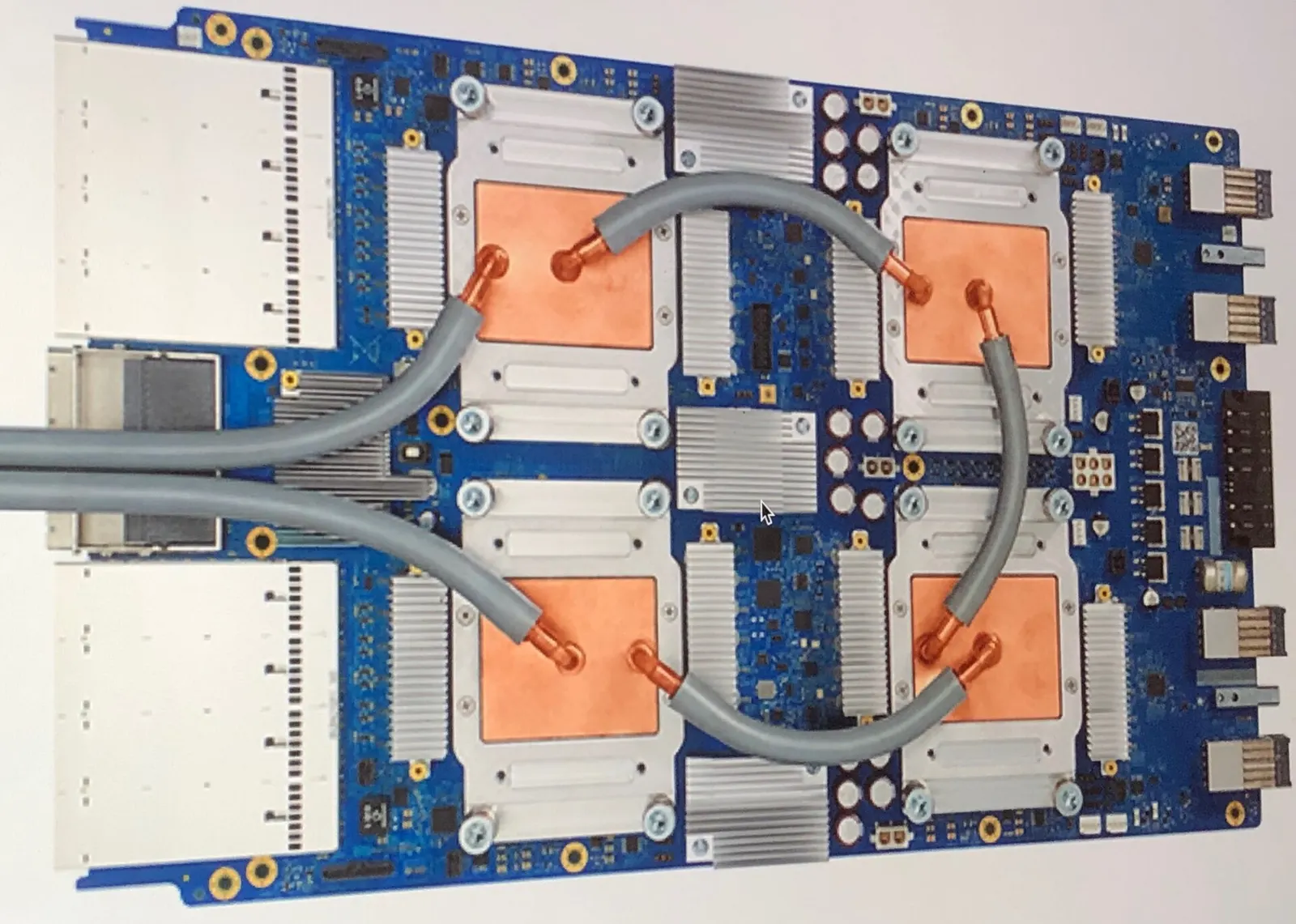
According to The Next Web, Oracle will host the TPUs in its own data centres and supply the power, cooling and networking. Karan Batta, an OCI senior vice president, described the arrangement as a "multi-year, multi-gigawatt partnership" and said Oracle will receive each new TPU on the day Google launches it. The Next Platform reports that the chips are aimed at large-model training, post-training, and reasoning and agentic inference, and that Google released its eighth-generation TPUs in April as two parts: the TPU 8t for training and the TPU 8i for inference. The Next Web adds that Google says the 8t delivers nearly three times the compute per pod of the previous generation. That figure is Google's own claim and has not been independently tested in the sources reviewed.
TPUs were the headline, but they were one of several accelerator announcements. The Register reports that Nvidia's Vera Rubin NVL72 systems and Vera CPUs are now generally available on OCI, with smaller HGX Rubin NVL8 systems planned and no date given. The Next Web adds a multi-year Intel Xeon deal, AMD E7-based instances close to launch, SambaNova SN50 with no timeline, and Positron Atlas inference servers available now.
Oracle also said it will deploy Cerebras systems in 2027, according to The Next Platform. That outlet describes the Cerebras CS-4 as a rack-scale system built on three WSE-3 Turbo wafer-scale chips, and notes Cerebras claims up to 30 times the per-user token speed of GPUs.
Why is Oracle adding rivals to Nvidia?
The Register wrote that the move appears aimed at reducing Oracle's heavy reliance on Nvidia. Oracle's public line is different. The Next Web quotes OCI president Mahesh Thiagarajan telling CNBC that the TPU and Cerebras additions are not a move away from Nvidia, whose chips he called "the best, most fungible." The Next Platform says Oracle states it does not want to restrict customers' hardware choices.
Both readings can be true: a cloud offering many chip families can win customers committed to any one of them and holds more leverage in pricing talks with each vendor. Google, for its part, gains a second large cloud channel for TPUs. The Next Web notes that Google is also building a TPU cloud called Crux AI with Blackstone, and that the neocloud Fluidstack is deploying TPUs for Anthropic.
Where does OpenAI fit?
OpenAI appears in two separate threads, and they should not be confused. The first is confirmed. According to The Next Web, Oracle and OpenAI announced four products: Oracle AI Workspace, which connects ChatGPT plugins to Oracle Fusion applications, NetSuite and the database and is described as "coming soon"; Oracle AI Security Mesh, a managed service that uses OpenAI's cyber models to find and test weaknesses in systems customers authorise; App Composer, which lets employees build applications with Codex and is available to a limited group of customers; and a small-business bundle of $12,000 a year in OCI credits for up to three years, limited to independent, privately held US companies. The same article says OpenAI's own chip, called Jalapeño, will also run on OCI, citing CNBC.
The second thread is a report, not an announcement. The Next Web notes that The Information reported OpenAI plans to buy Google's TPUs. The sources reviewed do not show either company confirming that, and none of the sources reviewed shows Oracle naming OpenAI as a TPU customer.
What does the balance sheet say?
The expansion is large relative to Oracle's size. The Next Platform reports that Oracle's fiscal-year sales rose from $57.4 billion in fiscal 2025 to $67.4 billion in fiscal 2026, that OCI revenue reached $7.4 billion in the first quarter of fiscal 2027, up 121% year on year, and that remaining performance obligations, the value of contracted future revenue, hit $664 billion, up $209 billion. Capital expenditure was $55.7 billion in fiscal 2026 and could exceed $90 billion this fiscal year, the same report says.
Investors have not been convinced. The Next Web reports that Oracle shares rose nearly 5% on Tuesday but remain down more than 30% this year, as investors question how the company will fund its data centres. It adds that Oracle's Project Jupiter site in New Mexico faces local opposition and an air-quality hearing on 7 December, and that Oracle says the project is on schedule. The Register notes that Oracle's Nvidia deals are worth tens of billions of dollars and that a Texas data-centre project involving Nvidia and OpenAI has reportedly run into trouble.
The Register's Brandon Vigliarolo argued that much of the week's news reflects circular spending among the largest AI companies while most businesses are still waiting for returns on their AI investments, citing an Apollo analysis that found little sign of AI payoffs outside the technology sector. That is a columnist's argument, not a reported fact.
What we don't know yet
Oracle has not disclosed how many TPUs it will deploy, what they will cost customers, or which TPU generation will be available first in 2027. The Next Platform reports no per-chip performance figures for the TPUs or SambaNova processors and no pricing.
What happens next?
Three things will show whether the multi-vendor strategy works. The first is whether customers actually choose TPUs on OCI when capacity opens in 2027, and at what price relative to Nvidia. The second is whether the Vera Rubin clusters planned at several gigawatts can be financed. The third is whether the OpenAI products move from "coming soon" to paying customers. Until then, Oracle has the broadest chip menu among the large clouds, and it is unclear whether it can afford to fill it.