RBI Raises Rates for the First Time Since 2023 and Turns to 'Calibrated Tightening'
A 25 basis point hike to 5.50% and a new stance mark a turn in India's policy as the central bank projects inflation near the top of its band.
Key facts
- The RBI raised the repo rate by 25 bps to 5.50%, with SDF at 5.25% and MSF and Bank Rate at 5.75%, and moved the stance to calibrated tightening[1][4]
- The rate decision was unanimous; two members wanted the stance kept neutral[1][3]
- CPI inflation was 4.8% in August; FY27 projection raised to 5.2% from 5.0%, with Q3 projected at 6.0%[1][3]
- FY27 GDP growth forecast raised to 7.1% from 6.7% after 7.8% growth in April-June[1][3]
- The governor called the rupee's slide short-term irrationality and said the RBI is ready to intervene[2]
- A Reuters poll cited before the meeting had 35 of 61 economists expecting a hike[5]
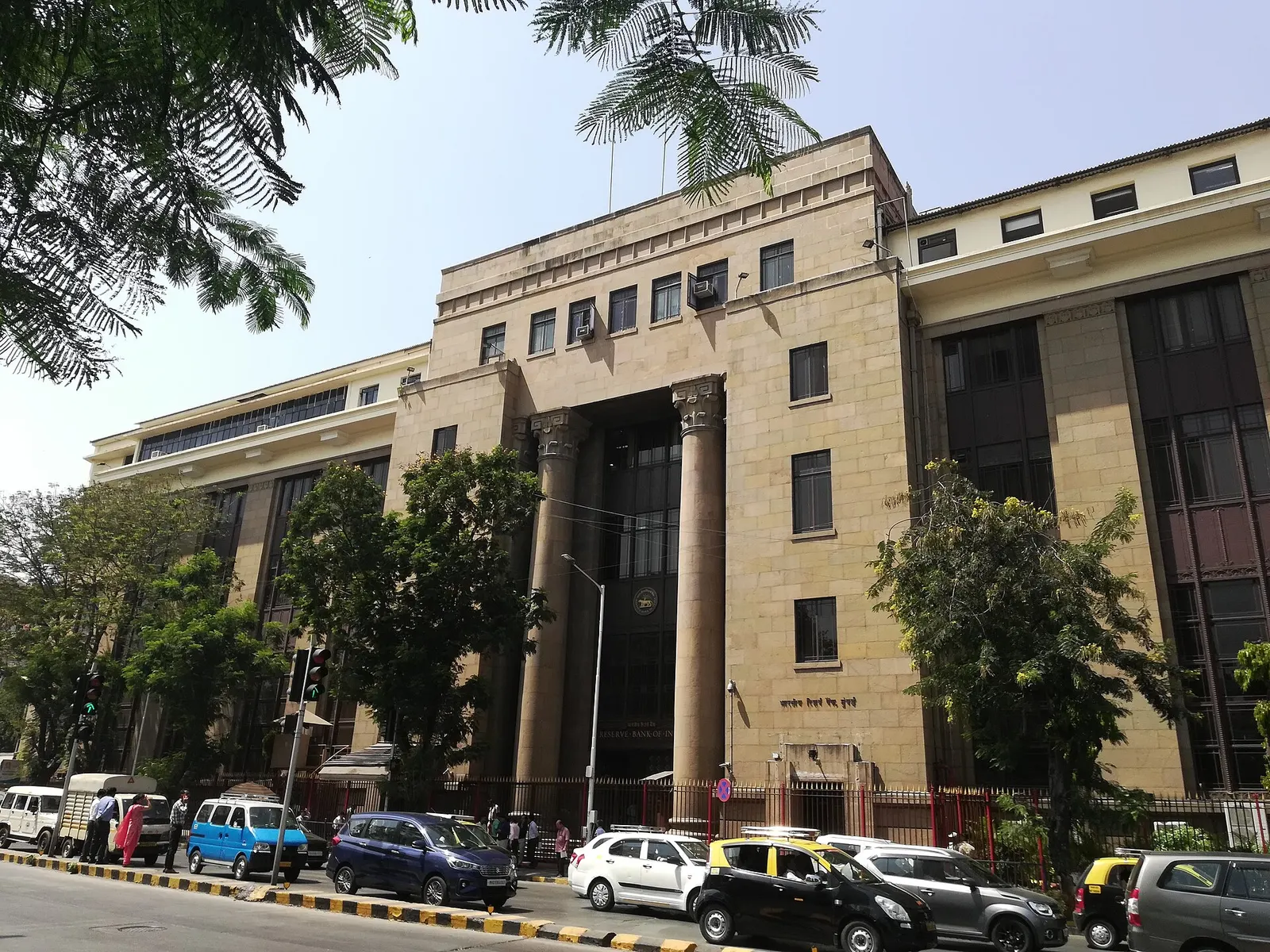
The Reserve Bank of India raised its policy repo rate by 25 basis points to 5.50% on October 7, its first increase since February 2023, and changed its stance from "neutral" to "calibrated tightening." The decision, announced by Governor Sanjay Malhotra at the end of a three-day meeting of the Monetary Policy Committee (MPC), ends a long pause that followed the easing cycle of 2025. According to SCC Online's account of the policy statement, the standing deposit facility rate moved to 5.25%, while the marginal standing facility rate and the Bank Rate rose to 5.75%.
The decision comes at a moment when the rupee is under pressure and the committee itself says inflation is "not as benign as last year."
What the committee decided
The vote on the rate was unanimous, but the stance was not. Per SCC Online, two members, Nagesh Kumar and Ram Singh, wanted to keep the stance neutral. The Usthadian Academy summary likewise reports a unanimous rate decision with majority support for the stance change. That split is informative. All six members agreed that rates had to rise now, but a minority doubted that the bank should signal a tightening bias in advance.
The wording of the new stance is deliberately conditional. Reports on the statement say rate cuts are "off the table in the near term," and that the next step could be either another hike or a pause, depending on the balance of growth and inflation. Usthadian reports that Malhotra has said the stance is not a commitment to repeated increases. CAclubindia adds that the extent and duration of the cycle will depend on inflation trends, the spread of price pressures and supply-side shocks.
The inflation arithmetic
The case for acting rests on the path of consumer prices. Headline CPI inflation rose to 4.8% in August from 4.5% in July, driven mainly by food and fuel, with core inflation also showing broader pressure, according to SCC Online. The bank's projection for FY2026-27 was lifted to 5.2% from 5.0%, per Usthadian.
The quarterly profile is more telling than the annual average. SCC Online lists projected inflation of 4.9% in the second quarter, 6.0% in the third and 5.7% in the fourth, with 5.6% in the first quarter of FY2027-28. Headline inflation is expected to average almost 5.8% over the next three quarters, and the core forecast for the year is 4.4%. India's flexible inflation-targeting framework sets a 4% goal with a tolerance band of 2% to 6%. On these projections, inflation would sit near the top of that band through the winter, and a 6.0% quarter leaves little margin for a further shock.
That is the logic of moving early. A central bank that waits for inflation to breach its band has to tighten harder later, and the MPC cited the risk that food and fuel price rises are spreading into other categories. The statement names the usual list of threats: geopolitical tensions, crude-oil volatility, a deficient southwest monsoon, El Nino-related weather disruption and tighter global financial conditions.
Growth is not the constraint
What allowed the committee to tighten is the strength of activity. Real GDP growth for FY2026-27 was raised to 7.1%, with quarterly projections of 7.2%, 6.9% and 6.8% for the rest of the year and 7.1% for the first quarter of next year, according to SCC Online. Usthadian reports the previous forecast was 6.7% and that the economy grew 7.8% in April to June. The bank credits private consumption, investment and exports.
Put together, the forecasts describe an economy running hot enough that the bank can accept a small cost to demand in exchange for credibility on prices. The RBI is presenting the hike as a response to domestic inflation with a growth cushion beneath it.
The rupee and the oil link
The currency is nonetheless part of the story. Whalesbook reports that Malhotra described the rupee's recent slide as "short-term irrationality" rather than a sign of weak fundamentals, pointing to the real effective exchange rate as evidence that the currency is undervalued. It says he attributed the pressure mainly to higher crude-oil prices and geopolitical tension in West Asia, and reiterated that the bank is ready to intervene in the foreign-exchange market to curb excessive volatility. The outlet describes the rupee as trading near record lows against the dollar but gives no precise level, so that figure is not quoted here.
Raising the policy rate does not lower crude prices, but it signals that the bank will not accommodate a second round of price increases. Whalesbook and the other accounts frame the hike as aimed at persistent inflationary pressure rather than at the exchange rate directly, and the governor's own comments suggest the bank prefers intervention for the currency and rates for inflation.
What to watch
Three markers will show how far the cycle goes. The first is the publication of the MPC minutes, scheduled for October 21 according to SCC Online, which will show how members weighed a further move and why two preferred a neutral stance. The second is the September CPI print, since the third-quarter projection of 6.0% implies a sharp acceleration from August's 4.8%. The third is the next scheduled meeting, which runs December 2 to 4.
Borrowers will feel the change first. Loans linked to the repo rate reprice with a lag, and banks must decide how quickly to pass the increase to deposits. Analysts quoted before the meeting, in a Reuters poll cited by Outlook Money, were divided: 35 of 61 economists expected a hike, and 29 of 53 who forecast December expected at least one more. The decision therefore landed on the hawkish side of a split consensus, and the guidance leaves a December increase open.
The RBI has the advantage of strong growth, which removes the main reason to hesitate, and the disadvantage of a currency exposed to the oil price and to events in West Asia that no rate decision can influence. If crude eases and the monsoon deficit proves manageable, a pause in December would be consistent with the new stance. If food prices keep spreading and the third-quarter projection materialises, a second increase is the more likely outcome.