Trump Pledges No Iran Strikes Before Midterms as Polls Tie War to Voter Anger
The president says the United States will not attack Iran before November 3, even as reports describe Pentagon plans and polls show the war and prices weighing on Republicans.
Key facts
- Trump posted that the US will not attack Iran before the November 3 midterms, while media reported Pentagon plans to strike if authorised.[1]
- Pew found about 65% of Americans disapprove of Trump's handling of the Iran war.[1]
- A NYT/Siena poll has Sherrod Brown leading Jon Husted 49% to 46% in Ohio.[2]
- Trump rallied in Vandalia, Ohio on October 3 as part of a plan to campaign in at least 17 states, and Brown's campaign linked Husted's war support to gas prices.[3]
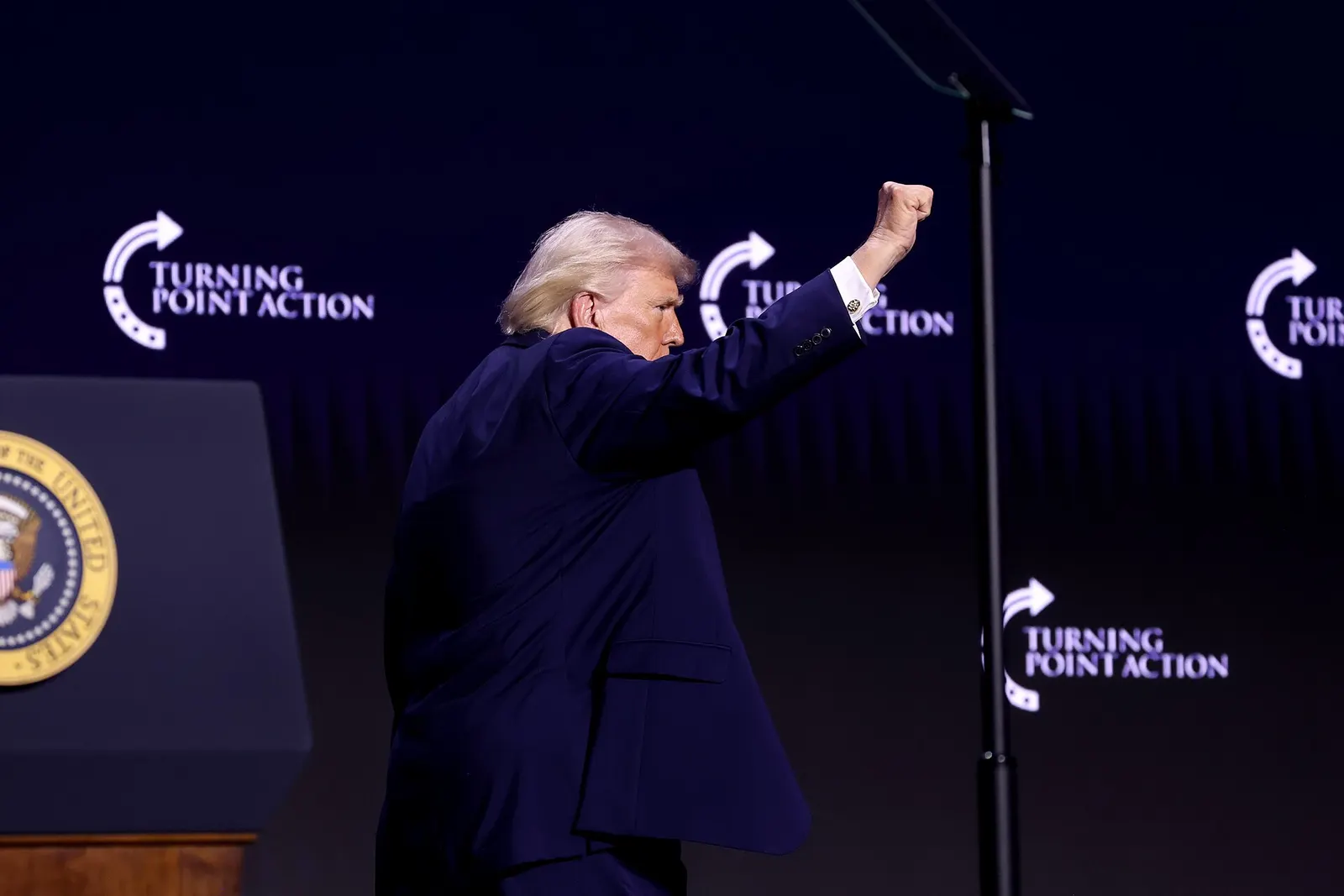
President Donald Trump said on Thursday that the United States "will not be attacking Iran at any time prior to the Midterm Elections to be held in the United States on November 3rd." The pledge, posted on Truth Social and reported by Al Jazeera, arrived alongside reports that the Pentagon has drawn up plans for renewed strikes. It also landed in a campaign in which, according to polling cited by several outlets, the war and the cost of living are central grievances for voters.
What was said, and what was reported
According to Al Jazeera, Trump described Iran as being in "very bad condition" and said Washington is "having productive discussions" with Tehran, without giving details of the talks or mentioning military preparations. The same outlet notes he used similar language on February 28, the day the United States and Israel first struck Iran, a point offered as context for how such assurances have fared before.
The New York Times and the Wall Street Journal, citing unnamed officials, reported that the Pentagon has prepared plans to attack Iran before the midterms if authorised, according to Al Jazeera's account. Axios, citing U.S. and Israeli officials, reported that U.S. Central Command was told to prepare for imminent major combat operations. The Atlantic reported along similar lines. None of these reports has been confirmed on the record by the administration, and the president's post does not address them.
The military posture is substantial. Al Jazeera reports that roughly 7,000 sailors and 2,000 Marines were sent last week on ships bound for the Middle East, including the USS Theodore Roosevelt carrier strike group, bringing U.S. troops in the region to about 20,000, with hundreds of aircraft and at least three carrier strike groups.
On the diplomatic side, Al Jazeera says a June ceasefire broke down over control of the Strait of Hormuz. Washington rejected a recent Iranian proposal to reopen the strait, in which Tehran sought sanctions relief, the release of frozen assets and a guarantee against further attacks. Foreign Minister Abbas Araghchi said last week that Iran was considering a U.S. counterproposal. Trump has said the United States has the upper hand in the strait but has also said he might consider a deal.
The electoral arithmetic
The pledge has a clear domestic audience. Al Jazeera cites a Pew survey finding that about 65 percent of Americans disapprove of Trump's handling of the Iran war, that most expect it to last at least another year, and that Republican and conservative voters are becoming more negative. It also cites a Reuters/Ipsos poll in which 30 percent of Trump's supporters said they were enthusiastic about voting in the midterms, against 48 percent of Democrats.
ABC News reported from Ohio on Sunday that a New York Times/Siena poll shows Democrats performing strongly in five traditionally Republican states: Texas, Alaska, Iowa, Kansas and Ohio. In Ohio, Democrat Sherrod Brown leads Republican Senator Jon Husted 49 percent to 46 percent in that poll. Charlie Cook, the founder of the Cook Political Report, called a Democratic House takeover a "done deal" and described Democratic chances of winning the Senate as "very realistic."
ABC quoted Boston University political scientist David Hopkins describing the midterms as "a lot more of a referendum on Trump" than on the Democratic Party. In his reading, Democrats have not become markedly more popular; Republicans have become less so. Hopkins also said higher gas and diesel prices have hit blue-collar workers especially hard.
Against that backdrop, analysts quoted by Al Jazeera say delaying strikes until after the vote could shield Republican candidates from a fresh escalation in the closing weeks. They also argue the reverse risk: a Republican defeat could push Trump toward military action, since he would have less to lose politically and cannot run for president again. These are interpretations by outside observers, not statements of White House strategy.
The war on the campaign trail
NBC News reported that Trump rallied in Vandalia, Ohio, on October 3 for Husted and gubernatorial nominee Vivek Ramaswamy, as part of a White House plan to campaign in at least 17 states before November 3. NBC observed that several upper sections of the gym were empty when he began. He predicted a "big surprise" for Republicans and asked supporters to behave as if he were on the ballot, acknowledging that turnout tends to fall when he is not. Republicans told NBC they worry that Trump-loyal voters who turn out in presidential years may stay home.
NBC also reported that Brown's campaign ran a mobile billboard through Dayton tying Husted's support for the war to higher gas prices. Brown said in a statement that Husted serves "billionaire buddies and special interests." The pledge on Iran therefore addresses a line of attack that Democrats are already using in competitive races.
Al Jazeera adds that Trump has previously said the conflict "is going to end immediately after the elections," and that in a Time interview roughly two weeks earlier he called it "possible" to ramp up bombing after the vote, without elaborating. Analysts quoted by the outlet describe the messaging as aimed at reassuring voters while keeping pressure on Tehran.
What to watch
Three questions stand out. The first is whether the pre-election pause holds. The president's record, as summarised by Al Jazeera, includes a February 28 strike carried out while talks were under way and days after he said he had not decided, and a June 2025 strike after he said he would decide in "two weeks." That history does not prove the new pledge will be broken, but it explains why reporters and foreign governments are treating the buildup and the promise as separate signals.
The second is whether Iran's response to the U.S. counterproposal changes the calculation. A deal that reopened the Strait of Hormuz would give the administration a way to claim progress before voters decide; a rejection would raise the cost of the pledge for a White House that has said talks are productive.
The third is the political effect. Polling points to an electorate dissatisfied with prices and the war, and the pledge may do little to move voters who already connect the two. Republican candidates in competitive Senate races now face the choice Hopkins described: embrace the president's policies or distance themselves from them and risk his displeasure. Whether a promise to hold fire for three more weeks eases that dilemma will be visible first in the polling, and then in the results on November 3.