DOE Puts $215 Million Behind Useful Quantum Machines
A new federal competition targets 100 logical qubits and real scientific workloads by 2028, shifting U.S. quantum policy from research support to delivery.
Key facts
- DOE launched a $215 million competition targeting a scientifically relevant, fault-tolerant quantum computer.[1][2]
- The program targets at least 100 logical qubits and uses milestone and bonus payments tied to performance.[1][2][3]
- DOE is creating a $45 million verification and validation testbed for hardware-neutral benchmarking.[2]
- The application documents distinguish the 100-logical-qubit first-generation goal from a future 1,000-logical-qubit system.[3]
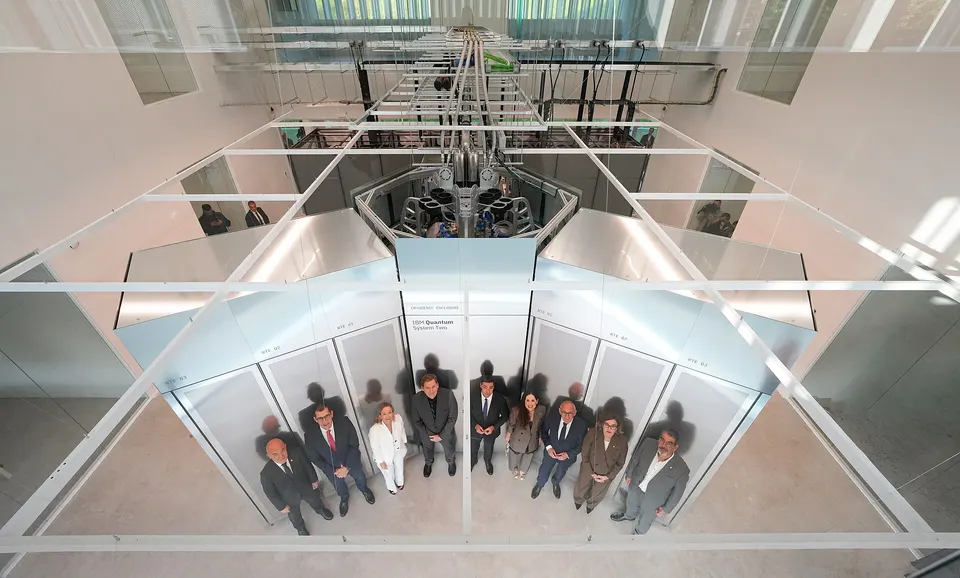
The U.S. Department of Energy has launched a $215 million competition to accelerate development of a fault-tolerant quantum computer that can perform scientifically meaningful work, not merely demonstrate laboratory benchmarks. The Quantum Genesis Q Competition sets a target of a first-generation scientifically relevant quantum computer by 2028, with applicants allowed to propose delivery as late as 2030. (simpler.grants.gov)
What changed
The program gives private companies a direct path into a national effort previously dominated by grants, research partnerships and long-term technical road maps. DOE is inviting domestic commercial entities to compete through milestone-based agreements. Early payments can total up to $1.5 million per applicant, while the larger incentive structure rewards teams that demonstrate a system with at least 100 logical qubits and thousands of reliable fault-tolerant operations. Additional bonus pools are tied to systems reaching 150 and 200 logical qubits. (simpler.grants.gov)
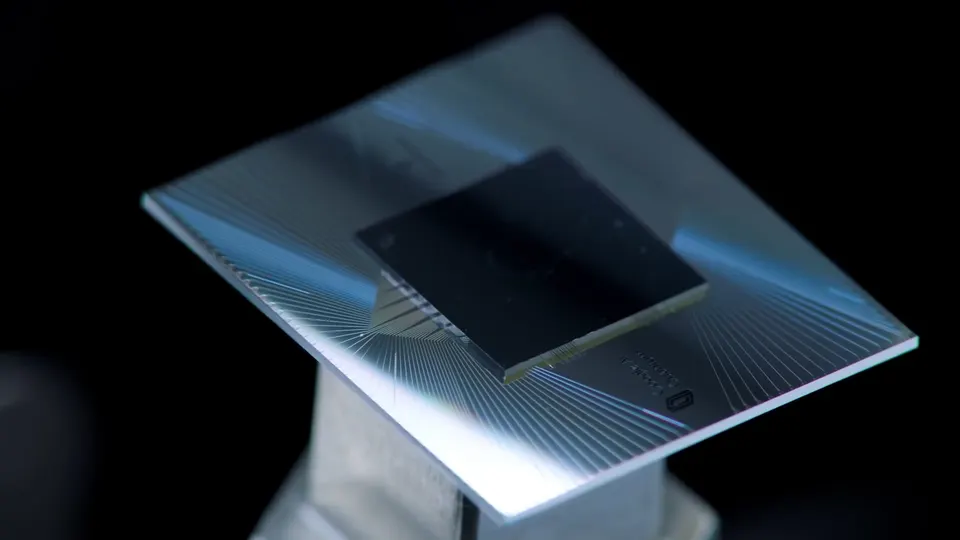
The distinction between physical and logical qubits is central. Physical qubits are fragile hardware elements; logical qubits are error-corrected computational units assembled from many physical qubits. DOE is therefore asking vendors to prove not just that they can increase raw qubit counts, but that their machines can sustain useful calculations despite noise and hardware imperfections.
The competition also creates a separate verification and validation testbed, with planned funding of $45 million. DOE national laboratories will help establish hardware-neutral methods for measuring performance and determining whether systems can integrate with the department’s scientific-computing ecosystem. The agency’s stated aim is to make quantum computers instruments for discovery rather than scientific objects of study. (fedscoop.com)
Why it matters
This is a policy shift from backing quantum potential to purchasing evidence of quantum utility. The deadline gives companies a common finish line, while milestone payments could push competing hardware approaches—such as superconducting, trapped-ion, neutral-atom and photonic systems—toward comparable demonstrations. The neutral testbed may be just as consequential as the prize money: without independent benchmarking, vendors can define progress using incompatible metrics.
For DOE, the program connects quantum computing to mission areas including energy, materials, chemistry and national security. A machine that can execute a useful workflow, even at a scale still manageable by classical computers, would offer stronger evidence of practical readiness than another isolated claim of quantum advantage.
What remains uncertain
The schedule is aggressive. DOE’s own application documents describe a first-generation system as requiring at least 100 logical qubits and thousands of hard fault-tolerant operations, while a future next-generation machine would require roughly 1,000 logical qubits and millions of operations. The 2028 goal therefore depends on advances in error correction, control electronics, fabrication, software and system integration arriving together. (govtribe.com)
The competition does not guarantee that any participant will meet the final milestone. DOE says it may extend awards if progress is substantial but incomplete, and companies that fail to qualify will not automatically be excluded from future federal work. The near-term test is whether competition can compress development timelines without encouraging vendors to optimize for a government benchmark instead of durable scientific capability.