Ukraine Says Russian Bombs Killed 55 at Komyshuvakha Aid Centre as Moscow Claims It Hit Military Units
Ukrainian officials put the toll from the 2 November strike on a Zaporizhzhia school used for aid at 55 with more missing, while Russia's Defence Ministry says it targeted troops, days before US-mediated talks in Abu Dhabi.
Key facts
- Ukraine's State Emergency Service raised the death toll from the 2 November Russian strike on Komyshuvakha to 55 on 7 November, according to the Kyiv Post.[3][1]
- Russia's Defence Ministry said its attack targeted Ukrainian military units around Komyshuvakha and two other settlements and that up to 25 Ukrainian servicemen were killed, according to NBC News.[5]
- President Volodymyr Zelenskyy said on 5 November that nearly 100 people may have perished in the Komyshuvakha strike, a projection that officials have not confirmed.[3]
- Ukraine's military intelligence service HUR said Colonel Fyodor Zubakov planned the strike and that four Su-34 aircraft carried it out, claims reported by the Kyiv Post and not independently verified.[3]
- US envoy Steve Witkoff said Ukrainian and Russian delegations would meet in Abu Dhabi on 10 and 11 November, NBC News reported.[5]
- A six-day truce in Oleshky that ran from 27 October to 1 November allowed nearly 800 civilians to leave the Russian-occupied Kherson city, according to Al Jazeera.[2][5]
Russian aircraft bombed a school used as an aid distribution point and shelter in Komyshuvakha, in Ukraine's Zaporizhzhia region, on Monday 2 November, and Ukrainian authorities put the death toll at 55 by 7 November. Moscow's Defence Ministry says it hit Ukrainian military units, and the two sides' accounts of the attack, the number of dead and the number still missing remain far apart.
What happened in Komyshuvakha?
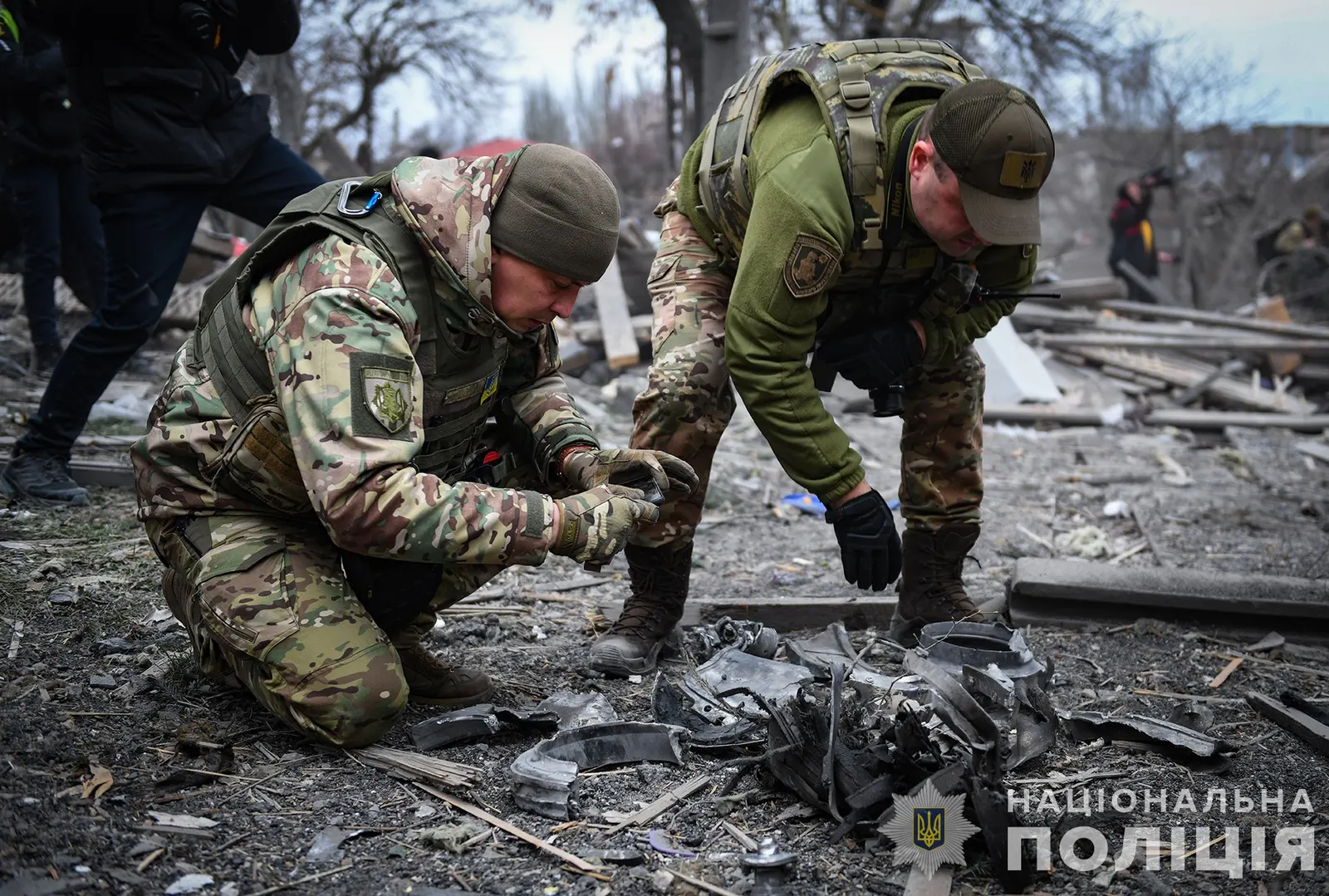
According to the Kyiv Post, two guided aerial bombs struck the "Dzherelo" gymnasium at about 9:45 a.m. on 2 November, destroying its sports hall and an adjacent utility structure where civilians had gathered for humanitarian aid. About an hour later, the Kyiv Post reported, a 3,000-kilogram FAB-3000 bomb hit the underground shelter beneath the site, which served as a heating point and public shelter for residents, rescuers and police.
President Volodymyr Zelenskyy gave a somewhat different sequence. As NBC News reported, he said Russian forces first dropped aerial bombs on the school as people arrived for aid and then struck the shelter with more bombs. The Kyiv Independent quoted him as saying the attack was an "exceptionally horrific strike" and that Russian forces "could not have been unaware" that residents collected aid at the school each week.
Komyshuvakha lies about 20 kilometres from the front line, and the Kyiv Independent noted that it has been treated as a front-line settlement since November 2025 because of repeated guided-bomb attacks.
How many people died?
The count has risen every day, and the figures come almost entirely from Ukrainian officials. The Kyiv Independent reported on 3 November that at least 33 people had been killed, per Zelenskyy and Governor Mykhailo Semikin, including two rescue workers and four police officers according to the State Emergency Service. Zelenskyy then said more than 50 people might be trapped under rubble, while Semikin said 48 were missing; the Kyiv Independent noted the two figures differ.
By 4 November, NBC News reported, officials put the toll at 40, and Ivan Fedorov, co-head of the Zaporizhzhia Regional Defense Council, wrote on Telegram that 59 people were missing. The State Emergency Service raised the figure to 55 on 7 November after recovering nine more bodies and body fragments, the Kyiv Post reported. CBS News carried the same figure of 55 on 8 November, attributing it to Zelenskyy, who said more people may still be under the rubble.
On 5 November Zelenskyy said the final total could approach 100, in the words the Kyiv Post quoted: "nearly a hundred people may have perished due to Russian bombs." That is a projection, not a confirmed count. None of these figures has been independently verified.
What does Russia say?
Russia's Defence Ministry said its attack targeted Ukrainian military units around Komyshuvakha and two other settlements and that up to 25 Ukrainian servicemen were killed, according to NBC News, which paraphrased the statement rather than quoting it. NBC News also noted that both Russia and Ukraine deny deliberately targeting civilians. The CBS report from 8 November contained no statement from Russian officials on Komyshuvakha, and no source reviewed for this article independently confirmed or refuted the ministry's claim of military targets.
Ukraine's military intelligence service, known as HUR, made a separate claim. The Kyiv Post reported that HUR said it had identified Colonel Fyodor Zubakov, head of the fire destruction group at the headquarters of Russia's Dnepr Group of Forces, as the planner, and that four Su-34 aircraft and six named pilots carried out the strike.
A second strike on the rescuers
The site has remained under fire. Zelenskyy said, according to CBS News, that Russian forces attacked Komyshuvakha again on the morning of 8 November with an FPV drone while rescue operations had been under way for seven days. The Kyiv Independent reported that rescuers and police who arrived on 2 November were themselves hit when another strike came at the same site.
Why the timing matters
The attack came one day after a six-day truce in the besieged, Russian-occupied city of Oleshky in the Kherson region expired. NBC News said the truce, which First Lady Melania Trump helped broker, allowed nearly 800 civilians to be evacuated. Al Jazeera reported that the ceasefire ran from 27 October to 1 November and that Mrs Trump hosted Russian and Ukrainian representatives, including Kirill Dmitriev, President Vladimir Putin's special envoy, on 5 November.
President Donald Trump met Dmitriev at the White House the same day. "I think we're going to be very close to settling Russia-Ukraine," Trump told reporters in the Oval Office, according to Al Jazeera, though he gave no specifics.
US envoy Steve Witkoff said delegations from Ukraine and Russia would meet in Abu Dhabi on 10 and 11 November to discuss ending the conflict, postwar security and de-escalation, NBC News reported. Zelenskyy accused Russia of escalating attacks ahead of what he called "trilateral talks next week with Russia," according to CBS News.
Strikes on power and heating
Alongside the Komyshuvakha attack, CBS News reported widespread outages with temperatures near freezing. DTEK, the private energy company, said more than 600,000 residents of the Dnipropetrovsk region were without power after a night attack on energy facilities. The mayor of Zlatopil, Mykola Baksheyev, said nearly 250,000 customers in the Kharkiv region lost power after a drone hit critical infrastructure. Zelenskyy said a strike in the Zhytomyr region left 140 apartment buildings without heating.
What we don't know yet
Several basic facts are unsettled. The final number of dead is unknown, with Ukrainian officials giving counts of missing people that ranged from 48 to 59 in the first days and Zelenskyy suggesting a total near 100. Whether Ukrainian servicemen were in or near the building, as Russia's ministry claims, has not been independently established in the reporting reviewed. HUR's identification of the crews and commander has not been verified outside Ukraine.
What happens next will turn on two tracks that are running in parallel: the diplomatic meeting scheduled in Abu Dhabi on 10 and 11 November, and continued strikes on both civilian infrastructure and rescue sites. Mr Trump's prediction of a "big agreement" has no published terms, and the Ukrainian and Russian delegations have given no public sign of narrowing their positions in the sources reviewed.